



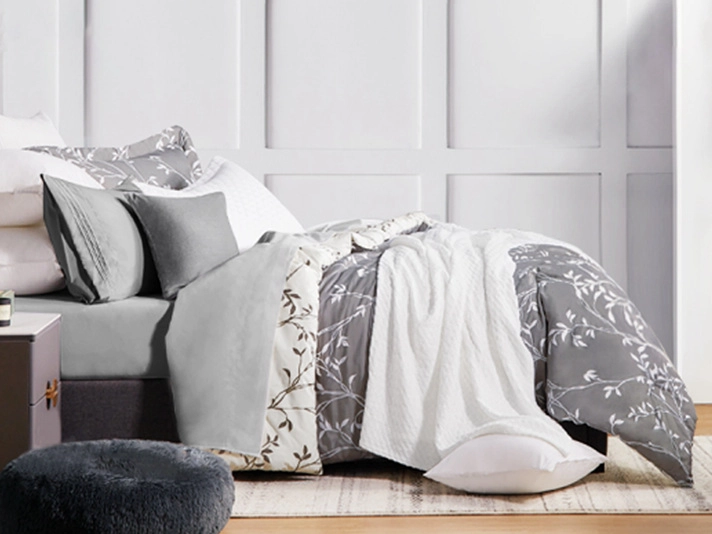
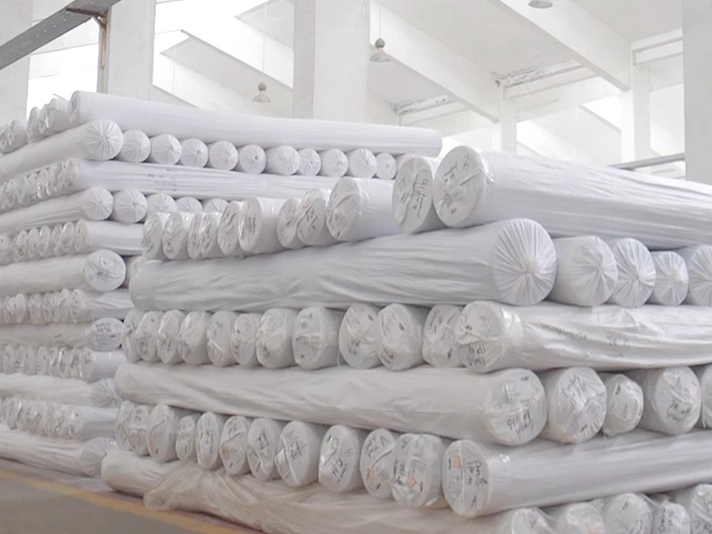

Securing a consistent supply of high-quality linens is a critical operational requirement for hotels, hospitals, and professional hospitality services. The procurement process for commercial bedding extends beyond simple price comparisons, requiring a deep analysis of textile durability, hygiene standards, and the manufacturer's capacity to scale production without compromising quality. This guide examines the core criteria for selecting partners capable of meeting institutional demands.
In the B2B textile sector, the ability to integrate manufacturing processes—from fabric sourcing to final stitching—significantly impacts the stability of the supply chain. For instance, bulk bedding suppliers with vertically integrated operations can better control costs and delivery timelines, reducing the risk of inventory shortages that can disrupt guest services or medical operations.
Readers will explore the technical differences between material blends, the importance of international certifications like Oeko-Tex, and how to evaluate the operational transparency of a factory. By focusing on these performance indicators, procurement managers can establish long-term partnerships that ensure both luxury and longevity in their bedding assets.
Commercial Bedding Procurement Essentials
Institutional bedding differs from consumer-grade products primarily in its requirement for high-frequency laundering and extreme durability. Commercial linens must withstand industrial washing machines and chemical disinfectants while maintaining a soft hand-feel and structural integrity. The fundamental challenge for procurement officers is balancing the initial acquisition cost with the total cost of ownership, which includes the replacement cycle frequency. High-performance fabrics, such as twill-weave polyester or high-thread-count cotton blends, are often preferred for their resistance to pilling and wrinkling. Furthermore, the ability of a manufacturer to offer OEM and ODM services allows institutions to tailor dimensions and materials to specific bed sizes—such as hospital-specific oversized mattresses or luxury hotel king sets—ensuring a professional fit and reduced waste during the laundry process.
Evaluating High-Volume Textile Partnerships
Selecting a reliable manufacturing partner requires a multifaceted evaluation of their technical infrastructure and management systems. A partner's value is measured by their ability to maintain consistency across thousands of units, ensuring that the first set of sheets is identical in quality to the ten-thousandth. The following dimensions provide a framework for assessing the viability of a commercial textile partner.
Material Performance Analysis
The choice of material directly affects the guest experience and the operational lifespan of the product. While 100% cotton is prized for breathability, polyester blends and microfiber are often utilized in high-turnover environments for their rapid drying times and wrinkle resistance. For professional applications, twill designs provide enhanced durability and a classic luxury appearance.
| Material Type | Primary Advantage | Best Application | Maintenance Level |
|---|---|---|---|
| 100% Polyester | High Durability/Quick Dry | Hospitals/Massage Tables | Low |
| Cotton Blend | Breathability & Comfort | Mid-Range Hotels | Medium |
| Bamboo/Silk | Luxury Feel/Hypoallergenic | High-End Spas | High |
| Microfiber | Cost-Efficiency/Softness | AirBnB/Student Housing | Low |
| Linen | Thermal Regulation | Boutique Hotels | High |
| Twill Weave | Structural Strength | Institutional Bedding | Medium |
Supply Chain Reliability
Consistency in the supply chain is non-negotiable for B2B operations. A manufacturer's reliability can be gauged by their production capacity and delivery track record. For example, Longshow Textiles utilizes four automated factories covering over 180,000 sqft, enabling a monthly output of 126,000 sheet sets. Such scale, combined with a professional management system that guarantees over 98% on-time delivery, ensures that institutional clients avoid the operational risks associated with shipping delays.
Customization Capabilities
Standard sizes often fail to meet the specific needs of diverse institutional environments. True capability in customization involves both fabric engineering (blends and weights) and structural design (custom dimensions and stitching). The ability to provide OEM/ODM services allows clients to specify everything from the twill pattern to the exact color palette, ensuring brand consistency across multiple properties or facilities.
Quality Certification Standards
Certifications serve as a proxy for trust in international trade. For textiles, the Oeko-Tex Standard 100 is essential as it guarantees the absence of harmful substances in the fabric, which is particularly critical for hospital and spa environments where skin sensitivity is a priority. SGS certification further validates the physical properties and safety of the materials, providing a verifiable layer of quality assurance.
Lead Time Management
The window between order placement and delivery is a key performance indicator. Effective lead time management is achieved through automation and skilled manpower. By employing over 280 production staff and utilizing automated systems, manufacturers can respond to hundreds of inquiries daily and maintain a fast turnaround, which is vital for businesses expanding their capacity or refreshing their inventory seasonally.
Institutional Application Needs
Different sectors have divergent requirements. Hospital bedding focuses on hygiene and sterilization resistance, while hotel bedding emphasizes "sumptuous softness" and a classic luxury look. Massage table sheets require specific dimensions and high resistance to oils and frequent washing. A versatile supplier should be able to pivot production to meet these varying technical specifications without altering the core quality of the fabric.
Scalability for Global Distribution
For companies operating internationally, the ability of a supplier to handle large-volume shipping (e.g., multiple 40ft containers per month) is paramount. Global experience, demonstrated by long-term participation in trade shows like the Canton Fair and Heimtextil, indicates a supplier's familiarity with international logistics, customs requirements, and the diverse quality expectations of different regional markets.
FAQ
What are the most durable materials for institutional bed sheets?
For high-turnover institutional environments, 100% polyester or polyester-cotton blends in a twill weave are generally the most durable. These materials offer a balance of strength, wrinkle resistance, and fast drying times, making them ideal for hospitals and hotels that utilize industrial laundering processes.
How do I verify the quality of a large-scale textile manufacturer?
Verification should be based on three pillars: international certifications (such as Oeko-Tex Standard 100 and SGS), production capacity (factory size and staff count), and a proven delivery record. Requesting samples and reviewing their history at major global textile exhibitions can also provide insight into their reliability.
Can commercial bedding be customized for specific bed dimensions?
Yes, professional manufacturers offering OEM and ODM services can customize dimensions, fabric blends, and colors. This is particularly important for specialty equipment like massage tables or non-standard hospital beds where a precise fit is necessary to ensure stability and a neat appearance.
What is the significance of the Oeko-Tex Standard 100 in bedding?
Oeko-Tex Standard 100 is a global certification that ensures every component of the textile—including threads and buttons—has been tested for harmful substances. For commercial buyers, this guarantees that the bedding is safe for human skin and meets stringent health and safety regulations.
What are the typical payment and shipping terms for bulk bedding orders?
Typical B2B payment terms include T/T, L/C, D/A, and D/P. Shipping is usually handled in bulk containers (e.g., 40ft containers), with packaging optimized for transport, such as PE bags within cartons, to ensure the product arrives in pristine condition.
How does vertical integration benefit the buyer in textile procurement?
Vertical integration means the company controls multiple stages of production. For the buyer, this results in more stable pricing, shorter lead times, and tighter quality control, as the manufacturer does not have to rely on third-party vendors for critical production phases.
References and further reading
- Oeko-Tex Standard 100: Global textile safety and sustainability certification guidelines.
- International Standards for Hospital Linen Management and Hygiene Protocols.
- Textile Engineering: Analysis of Twill vs. Plain Weave in High-Stress Commercial Environments.
 English
 Afrikaans
 Albanian
 Amharic
 Arabic
 Armenian
 Azerbaijani
 Basque
 Belarusian
 Bengali
 Bosnian
 Bulgarian
 Catalan
 Cebuano
 China
 Corsican
 Croatian
 Czech
 Danish
 Dutch
 Esperanto
 Estonian
 Finnish
 French
 Frisian
 Galician
 Georgian
 German
 Greek
 Gujarati
 Haitian Creole
 Hausa
 Hawaiian
 Hebrew
 Hindi
 Miao
 Hungarian
 Icelandic
 Igbo
 Indonesian
 Irish
 Italian
 Japanese
 Javanese
 Kannada
 Kazakh
 Khmer
 Rwandese
 Korean
 Kurdish
 Kyrgyz
 Lao
 Latin
 Latvian
 Lithuanian
 Luxembourgish
 Macedonian
 Malgashi
 Malay
 Malayalam
 Maltese
 Maori
 Marathi
 Mongolian
 Myanmar
 Nepali
 Norwegian
 Norwegian
 Occitan
 Pashto
 Persian
 Polish
 Portuguese
 Punjabi
 Romanian
 Russian
 Samoan
 Scottish Gaelic
 Serbian
 Sesotho
 Shona
 Sindhi
 Sinhala
 Slovak
 Slovenian
 Somali
 Spanish
 Sundanese
 Swahili
 Swedish
 Tagalog
 Tajik
 Tamil
 Tatar
 Telugu
 Thai
 Turkish
 Turkmen
 Ukrainian
 Urdu
 Uighur
 Uzbek
 Vietnamese
 Welsh
 Bantu
 Yiddish
 Yoruba
 Zulu