



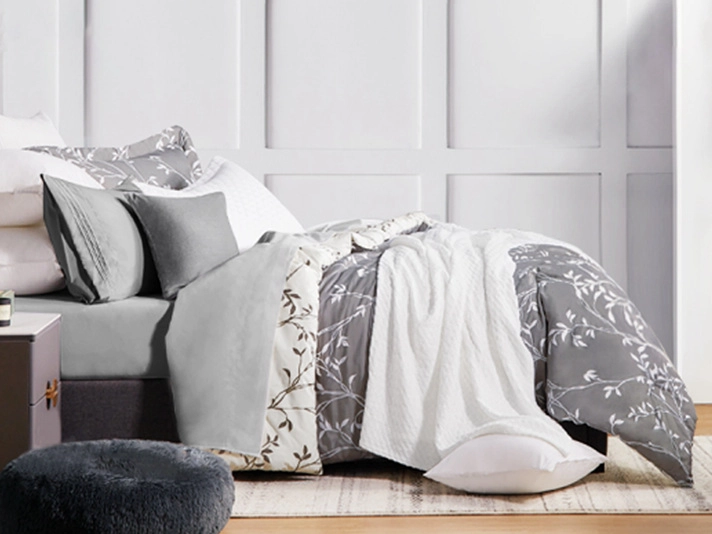
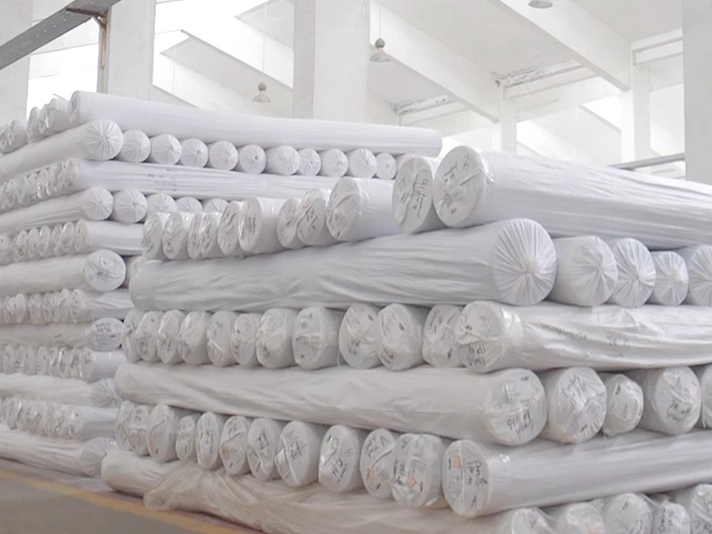

Sourcing high-quality linens for commercial hospitality requires a deep understanding of the intersection between material science and operational durability. For procurement managers in the hotel and spa industries, the goal is to find a balance between guest luxury and industrial-grade longevity. This guide examines the critical factors involved in selecting professional textile partners to ensure consistency across large-scale bedding deployments.
The complexities of the B2B textile market mean that a simple product order is often insufficient. Buyers must consider vertical integration, where the manufacturer controls everything from fabric weaving to final stitching. When working with custom bedding manufacturers, the focus shifts from unit price to total cost of ownership, encompassing laundry cycle durability and skin-contact safety standards.
In the following analysis, we provide a framework for evaluating production capacities, material blends, and quality certifications. Readers will learn how to distinguish between standard wholesale offerings and truly customized solutions, and how to verify a supplier's ability to maintain a stable supply chain for high-volume, time-sensitive projects.
Fundamentals of Professional Bedding Sourcing
Professional bedding procurement is governed by the requirement for "institutional grade" textiles. Unlike consumer retail products, commercial linens must withstand rigorous industrial laundering processes, including high-temperature washing and chemical bleaching, without losing structural integrity or softness. The foundation of a successful procurement strategy lies in the technical specification of the yarn count and weave density. For instance, the choice between long-staple cotton and microfiber blends is not merely a matter of cost, but a decision based on the intended use case—whether it is for a luxury five-star suite or a high-turnover medical facility. Furthermore, the integration of automated production lines reduces human error in dimensions and stitching, which is critical when ordering thousands of sheet sets that must fit standardized mattress sizes perfectly. Understanding these technical baselines allows buyers to communicate precise requirements to their manufacturing partners, reducing the risk of sample-to-production discrepancies.
Strategic Evaluation for Custom Textile Procurement
To optimize the procurement process, businesses must move beyond basic catalogs and evaluate the systemic capabilities of their supplier. The following seven dimensions provide a comprehensive rubric for assessing whether a manufacturer can support the operational demands of a global brand or a specialized boutique hotel.
Material Selection and Performance
The choice of raw materials dictates the tactile experience and the lifespan of the product. Cotton remains the gold standard for breathability, while bamboo and silk blends are increasingly requested for hypoallergenic properties. A professional manufacturer should provide a wide array of options, including linen and microfiber, tailored to specific environmental conditions and guest preferences. For luxury bathrobes, for example, cut-velvet cotton offers superior absorbency and warmth compared to standard terry cloth.
| Material Type | Primary Property | Ideal Application | Durability Factor |
|---|---|---|---|
| 100% Cotton | High Breathability | Luxury Hotel Sheets | High (if long-staple) |
| Bamboo Blend | Eco-friendly/Soft | Spa & Wellness Center | Medium |
| Microfiber | Quick Drying | Budget Hotels/Hospital | Very High |
| Cut-Velvet | Ultra-Absorbent | Premium Bathrobes | High |
| Linen | Thermal Regulation | Summer Resorts | Very High |
| Silk Blend | High Lustre | VIP Executive Suites | Low/Medium |
Customization Depth and OEM Capabilities
True customization extends beyond adding a logo. It involves the ability to adjust the weight of the fabric—such as offering bathrobes in 1000g, 1100g, or 1200g options—to match the desired level of luxury. OEM and ODM services should allow for bespoke sizing and color matching to align with corporate brand identities. A manufacturer's ability to provide these granular adjustments indicates a higher level of engineering control over the production process.
Production Scalability and Lead Times
For large-scale operations, the ability to scale is paramount. A vertically integrated company with multiple automated factories can manage higher volumes—such as producing over 126,000 sheet sets per month—without sacrificing quality. Buyers should evaluate the "on-time delivery" rate; a consistent track record of 98% or higher delivery reliability is essential to prevent disruptions in the hospitality supply chain.
Quality Certification and Compliance
Certifications serve as third-party validation of safety and ethics. Oeko-Tex Standard 100 is critical for ensuring that textiles are free from harmful substances, which is a non-negotiable requirement for products in direct contact with skin. SGS certification further validates the physical properties and quality consistency of the fabric. These standards protect the brand from liability and ensure guest health.
Supply Chain Reliability and Logistics
The distance between the factory and the destination introduces logistics risks. A supplier with extensive experience in global trade shows and international shipping can better navigate customs and freight challenges. Vertical integration—owning the production staff and the factories—minimizes the reliance on subcontractors, thereby reducing the risk of quality variance between batches.
Application Scenarios for Hospitality
Bedding requirements vary drastically by sector. Hotels prioritize aesthetic luxury and a "crisp" feel, whereas hospitals focus on hygiene and chemical resistance. Spas require high-absorbency towels and robes that maintain softness after repeated industrial drying. A versatile manufacturer should be able to pivot their production techniques to meet these diverse functional demands.
Evaluating Long-term Partnership Value
A one-stop-shop approach for bed and bath essentials streamlines procurement and ensures a cohesive feel across all guest touchpoints. The value of a long-term partnership lies in the supplier's ability to provide consistent pricing, fast lead times for replacement orders, and professional engineering support to iterate product designs as guest needs evolve.
FAQ
What is the difference between retail bedding and commercial hotel bedding?
Commercial bedding is designed for industrial durability. It utilizes higher thread counts or specific weave structures that can withstand high-temperature commercial washing and frequent chemical treatments without fraying or thinning. Additionally, commercial linens often follow standardized dimensions for hospitality mattresses to ensure a tight, professional fit.
How does fabric weight (gsm) affect the quality of a hotel bathrobe?
Fabric weight, often measured in grams, directly correlates to the plushness and absorbency of the robe. For instance, a 1200g robe provides a heavier, more luxurious feel and higher warmth, making it ideal for high-end spas, while a 1000g robe offers a lighter, more breathable experience suitable for warmer climates or general hotel use.
What certifications should I look for when sourcing textiles?
The Oeko-Tex Standard 100 is the most recognized certification for textile safety, ensuring no harmful chemicals are present in the final product. SGS certifications are also valuable for verifying that the product meets specific technical specifications and quality standards agreed upon in the contract.
Can I customize the material blend for specific guest needs?
Yes, professional manufacturers can offer various blends. If you require a balance between the softness of cotton and the durability of microfiber, or the luxury of silk with the practicality of polyester, a fabric expert can assist in creating a custom blend that meets your specific performance and cost targets.
What is a reasonable MOQ for custom hotel linens?
Minimum Order Quantities (MOQ) vary by product. For specialized items like custom-branded bathrobes, an MOQ of 200 pieces is common. This allows the manufacturer to set up the specialized machinery and dyes required for a custom production run while maintaining cost-efficiency for the buyer.
How can I ensure the bedding fits my existing mattresses perfectly?
The best way is to provide precise mattress measurements to the manufacturer's engineering team. A professional supplier will create technical drawings or samples for your approval before mass production, ensuring that sheets and covers fit snugly without excessive bunching or slipping.
References and further reading
- International Textile Standards for Commercial Hospitality (ISO/ASTM Guidelines).
- Oeko-Tex Standard 100: Criteria and Testing Methods for Textile Safety.
- Hospitality Supply Chain Management: Optimizing Lead Times and Quality Control.
 English
 Afrikaans
 Albanian
 Amharic
 Arabic
 Armenian
 Azerbaijani
 Basque
 Belarusian
 Bengali
 Bosnian
 Bulgarian
 Catalan
 Cebuano
 China
 Corsican
 Croatian
 Czech
 Danish
 Dutch
 Esperanto
 Estonian
 Finnish
 French
 Frisian
 Galician
 Georgian
 German
 Greek
 Gujarati
 Haitian Creole
 Hausa
 Hawaiian
 Hebrew
 Hindi
 Miao
 Hungarian
 Icelandic
 Igbo
 Indonesian
 Irish
 Italian
 Japanese
 Javanese
 Kannada
 Kazakh
 Khmer
 Rwandese
 Korean
 Kurdish
 Kyrgyz
 Lao
 Latin
 Latvian
 Lithuanian
 Luxembourgish
 Macedonian
 Malgashi
 Malay
 Malayalam
 Maltese
 Maori
 Marathi
 Mongolian
 Myanmar
 Nepali
 Norwegian
 Norwegian
 Occitan
 Pashto
 Persian
 Polish
 Portuguese
 Punjabi
 Romanian
 Russian
 Samoan
 Scottish Gaelic
 Serbian
 Sesotho
 Shona
 Sindhi
 Sinhala
 Slovak
 Slovenian
 Somali
 Spanish
 Sundanese
 Swahili
 Swedish
 Tagalog
 Tajik
 Tamil
 Tatar
 Telugu
 Thai
 Turkish
 Turkmen
 Ukrainian
 Urdu
 Uighur
 Uzbek
 Vietnamese
 Welsh
 Bantu
 Yiddish
 Yoruba
 Zulu