




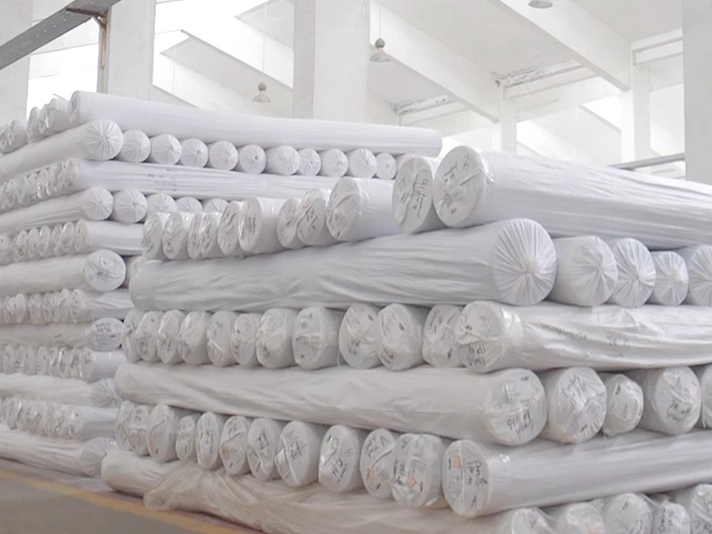

Establishing a robust supply chain for commercial linens requires a deep understanding of textile engineering and procurement logistics. Whether for the hospitality sector, healthcare facilities, or retail distribution, the goal is to balance initial acquisition costs with long-term operational durability. This guide examines the technical and commercial frameworks necessary for successful bedding wholesale strategies, focusing on material selection and manufacturer verification.
For B2B buyers, the challenge often lies in maintaining consistency across large volumes. Variations in thread count, fabric blend, or finishing processes can lead to inconsistent guest experiences or premature product failure in high-turnover environments. By shifting the focus from simple unit pricing to "total cost of ownership," procurement officers can identify partners capable of delivering standardized, high-performance textiles that withstand industrial laundering cycles.
Readers will explore the critical metrics for evaluating textile factories, from automation levels to global certifications. We will analyze how vertically integrated manufacturing reduces risk and how specific material choices—such as cotton, bamboo, or specialized blends—impact both the end-user comfort and the operational efficiency of the supply chain. The following analysis provides a roadmap for auditing potential partners and optimizing product specifications.
Strategic Bedding Procurement Fundamentals
Commercial textile procurement is fundamentally different from retail purchasing, as it prioritizes "industrial endurance" over mere aesthetic appeal. A professional procurement strategy begins with a comprehensive Needs Analysis, where the buyer defines the environment—such as a five-star hotel, a specialized medical clinic, or a home-use retail line. For instance, hospital linens require high resistance to chemical disinfectants, while luxury hotel bedding prioritizes "hand-feel" and breathability. Understanding these nuances prevents the common mistake of over-specifying (paying for features not needed) or under-specifying (resulting in high replacement rates). Furthermore, the shift toward sustainable textiles has introduced new complexities; buyers must now verify that "eco-friendly" claims are backed by recognized third-party audits rather than internal marketing. Effective sourcing involves auditing the manufacturer's ability to maintain a stable raw material pipeline, ensuring that the fabric used in the first batch is identical to the fabric used a year later, thereby maintaining brand consistency across the entire facility or product line.
Evaluating Bulk Bedding Supply Chains
Selecting a manufacturing partner requires a systematic audit of their technical infrastructure and quality management systems. A reliable supplier does not simply provide a product but offers a scalable solution that integrates with the buyer's inventory cycle. The following seven dimensions provide a framework for evaluating the operational maturity of a textile partner.
Material Performance Analysis
The choice of fiber directly dictates the product's lifecycle. Natural fibers like cotton and linen offer superior breathability and luxury, whereas polyester blends increase durability and reduce wrinkles. Specialized materials such as bamboo or silk are utilized for niche high-end markets. The critical factor is the "blend ratio," which determines the balance between softness and strength.
| Material Type | Key Property | Primary Use Case | Durability Factor |
|---|---|---|---|
| 100% Cotton | High Breathability | Luxury Hotels / Home | Medium |
| Polyester Blend | Wrinkle Resistance | Mid-range Hospitality | High |
| Bamboo Fiber | Hypoallergenic | Eco-conscious Retail | Medium |
| Microfiber | Fast Drying | Budget Lodging / Spa | High |
| Linen | Thermal Regulation | High-end Boutique | Very High |
| Silk Blend | Premium Texture | Luxury Spa / Bedroom | Low |
Certification and Compliance Standards
In global trade, certifications serve as the primary proxy for quality assurance. Oeko-Tex Standard 100 is the industry benchmark, ensuring that textiles are free from harmful substances. SGS certification provides third-party verification of physical properties, such as tensile strength and color fastness. For B2B buyers, these certifications reduce the risk of regulatory non-compliance and ensure that products are safe for sensitive skin, which is paramount in medical and infant-care bedding.
Production Scalability and Automation
The ability to handle large volumes without quality drift is a hallmark of an advanced factory. Automation in cutting and sewing reduces human error and ensures dimensional stability across thousands of units. Factories with significant footprints—such as those exceeding 180,000 sqft—and a dedicated workforce are better positioned to manage simultaneous orders for different product lines without compromising the production schedule of any single client.
Lead Time and Supply Chain Reliability
Supply chain disruptions can halt a hotel opening or a retail launch. Reliability is measured by the "on-time delivery rate." A professional management system that guarantees over 98% on-time delivery is critical for lean inventory management. Buyers should evaluate whether the manufacturer owns multiple stages of production (vertical integration), as this minimizes reliance on external fabric mills and reduces the risk of raw material delays.
Customization and OEM Capabilities
Standard products rarely meet all the needs of a specialized brand. OEM (Original Equipment Manufacturer) and ODM (Original Design Manufacturer) services allow buyers to specify everything from the weave pattern (such as a classic Waffle Weave) to customized colors and sizes. The ability to produce specific dimensions—from Twin to King sizes—ensures that the bedding fits the exact mattress specifications of the client's facility.
Quality Control Mechanisms
Effective quality control (QC) must be proactive rather than reactive. This includes raw material inspection, in-process monitoring, and final pre-shipment audits. A robust QC system ensures that defects like uneven stitching or fabric pilling are caught before the product leaves the factory. For bulk orders, the consistency of the "pre-washed" finish is essential to ensure that the product does not shrink excessively after the first industrial wash.
Lifecycle Value and Durability
The true cost of bedding is measured by its "cost per wash." High-quality construction, characterized by reinforced hems and high-density weaves, extends the product's life. For example, a waffle weave blanket crafted from pre-washed natural fabric provides a balance of luxury and durability, becoming softer with each wash while maintaining structural integrity. Buyers should request samples to test "pill resistance" and "tensile strength" before committing to large volumes.
FAQ
What is the primary difference between residential and commercial bedding specifications?
Commercial bedding is engineered for "industrial laundering," meaning it must withstand frequent high-temperature washing and chemical treatments without losing structural integrity or color. While residential bedding focuses on immediate softness and aesthetic trends, commercial specifications prioritize durability, shrinkage control, and a standardized fit for institutional mattresses.
How does vertical integration benefit a B2B textile buyer?
Vertical integration means the supplier controls multiple stages of production, from fabric weaving to final sewing. This reduces the number of intermediaries, which lowers the risk of communication errors, shortens lead times, and allows for stricter quality control over the raw materials, ensuring that the fabric consistency remains stable across multiple bulk orders.
Which certifications should I look for when sourcing bulk linens?
The Oeko-Tex Standard 100 is essential as it certifies that the textile is free from harmful chemicals. Additionally, SGS certification is highly valued for verifying the physical specifications and quality standards of the product. These third-party certifications provide objective proof of quality that internal company claims cannot match.
What are the advantages of pre-washed fabrics in commercial bedding?
Pre-washing removes residual sizing agents and stabilizes the fabric, which significantly reduces the risk of shrinkage during the customer's first wash. It also enhances the initial softness and "hand-feel" of the product, making it more inviting for the end-user while ensuring that the dimensions remain consistent over time.
How can I evaluate the reliability of a textile manufacturer's lead time?
Ask for the manufacturer's documented on-time delivery rate over the last 12 months. A professional supplier should be able to demonstrate a rate of 98% or higher. Additionally, inquire about their production capacity (sqft of factory space and number of staff) to ensure they have the "buffer capacity" to handle urgent orders without delaying existing contracts.
What is the best way to test a sample before placing a bulk order?
Perform a "wash-and-wear" test. Wash the sample in a commercial laundry setting using the same detergents and temperatures you intend to use in operation. Check for three main factors: shrinkage percentage, color bleeding, and pilling. If the sample maintains its dimensions and texture after 5-10 cycles, it is likely suitable for bulk procurement.
References and further reading
- International Standard for Textile Testing: ISO 105-C06 (Color Fastness to Washing)
- Oeko-Tex Standard 100: Global Certification for Textile Safety
- Industrial Laundry Management Guidelines for Hospitality Standards
 English
 Afrikaans
 Albanian
 Amharic
 Arabic
 Armenian
 Azerbaijani
 Basque
 Belarusian
 Bengali
 Bosnian
 Bulgarian
 Catalan
 Cebuano
 China
 Corsican
 Croatian
 Czech
 Danish
 Dutch
 Esperanto
 Estonian
 Finnish
 French
 Frisian
 Galician
 Georgian
 German
 Greek
 Gujarati
 Haitian Creole
 Hausa
 Hawaiian
 Hebrew
 Hindi
 Miao
 Hungarian
 Icelandic
 Igbo
 Indonesian
 Irish
 Italian
 Japanese
 Javanese
 Kannada
 Kazakh
 Khmer
 Rwandese
 Korean
 Kurdish
 Kyrgyz
 Lao
 Latin
 Latvian
 Lithuanian
 Luxembourgish
 Macedonian
 Malgashi
 Malay
 Malayalam
 Maltese
 Maori
 Marathi
 Mongolian
 Myanmar
 Nepali
 Norwegian
 Norwegian
 Occitan
 Pashto
 Persian
 Polish
 Portuguese
 Punjabi
 Romanian
 Russian
 Samoan
 Scottish Gaelic
 Serbian
 Sesotho
 Shona
 Sindhi
 Sinhala
 Slovak
 Slovenian
 Somali
 Spanish
 Sundanese
 Swahili
 Swedish
 Tagalog
 Tajik
 Tamil
 Tatar
 Telugu
 Thai
 Turkish
 Turkmen
 Ukrainian
 Urdu
 Uighur
 Uzbek
 Vietnamese
 Welsh
 Bantu
 Yiddish
 Yoruba
 Zulu