




For hospitality managers, healthcare procurement officers, and home textile distributors, identifying reliable wholesale suppliers of bedding is a critical operational decision. The quality of linens directly impacts guest satisfaction in hotels, patient comfort in hospitals, and the marketability of retail products. This guide examines the technical and commercial criteria necessary to evaluate a manufacturing partner capable of sustaining high-volume requirements without compromising on durability or comfort.
The commercial bedding industry is characterized by a tension between cost-efficiency and textile longevity. Whether sourcing 100% cotton for luxury suites or heavy-duty microfiber for massage tables and clinics, buyers must navigate a complex landscape of thread counts, weave types, and chemical certifications. A failure in supplier consistency often leads to supply chain disruptions, increased replacement costs, and diminished brand reputation due to pilling or shrinkage.
Readers will learn how to analyze vertical integration in textile manufacturing, the significance of Oeko-Tex and SGS certifications, and how to structure OEM/ODM requests. By shifting the focus from simple unit pricing to total lifecycle value, procurement professionals can secure partnerships that offer a balance of competitive pricing, fast lead times, and rigorous quality assurance.
Strategic Sourcing for Commercial Bedding
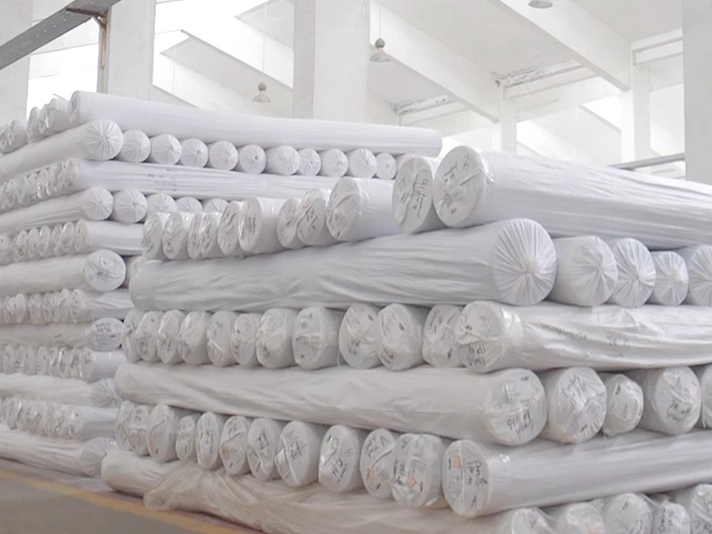
Effective B2B sourcing in the textile sector requires an understanding of the production ecosystem. Vertical integration—where a company controls multiple stages of production—is a primary indicator of a supplier's ability to maintain consistency. For instance, a manufacturer operating its own automated factories can better regulate the fabrication process, from raw material selection to final stitching. This integration minimizes the risks associated with third-party delays and ensures that technical specifications, such as percale weaves or specific blend ratios, are strictly adhered to across thousands of units. In the context of high-volume orders, such as those exceeding 100,000 sheet sets per month, automation is essential to reduce human error and maintain a delivery rate that prevents stock-outs in the buyer's inventory.
Evaluating Bedding Supply Chain Partners
When auditing potential partners, buyers should move beyond a generic catalog and investigate the actual operational capabilities of the facility. The following dimensions provide a framework for technical and commercial evaluation.
Material Selection and Performance
The choice of fabric determines the product's application and lifespan. Cotton and linen offer breathability for luxury settings, while microfiber and polyester blends provide the durability and wrinkle resistance required for commercial massage tables or high-turnover hotel environments. High-performance materials must resist pilling and maintain softness after repeated industrial laundering.
| Material Type | Key Property | Best Application | Procurement Focus |
|---|---|---|---|
| Microfiber | Oil/Wrinkle Resistant | Massage & Spa | Commercial Strength |
| Cotton Percale | Breathable & Crisp | Hotel Bedding | Thread Count Consistency |
| Bamboo Blend | Hypoallergenic | Eco-friendly Home | Sourcing Certification |
| Silk/Satin | Low Friction | Luxury/Beauty | Fabric Weight (Momme) |
| Polyester | High Durability | Institutional/Hospital | Wash-cycle Resistance |
| Linen | Thermal Regulation | High-end Boutique | Shrinkage Control |
Certification and Safety Standards
In the global textile market, certifications act as third-party verification of quality and safety. Oeko-Tex Standard 100 is critical for ensuring that fabrics are free from harmful substances, which is a non-negotiable requirement for baby bedding and healthcare linens. Similarly, SGS certifications provide assurance regarding the physical properties of the fabric and its compliance with international trade standards, reducing the risk of customs delays or product recalls.
Customization and OEM Capabilities
Generic products rarely meet the specific branding or sizing needs of a professional enterprise. A capable supplier should offer comprehensive OEM and ODM services, allowing for customized fabric blends, specific dimensions for non-standard massage tables, and bespoke packaging. The ability to provide samples prior to full-scale production is a key indicator of a supplier's commitment to accuracy and customer satisfaction.
Production Scale and Lead Times
Scalability is measured by the total square footage of the facility and the number of dedicated production staff. A manufacturer with 180,000+ sqft. of automated space can typically handle larger monthly quotas—such as 14 x 40ft containers—without experiencing the bottlenecks that plague smaller workshops. Buyers should evaluate the "on-time delivery" percentage, as a rate of 98% or higher is necessary for lean inventory management.
Quality Control Systems
Quality control must be integrated into every stage of the process, not just the final inspection. This includes raw material testing, in-line monitoring during weaving, and final audits before packaging. For commercial-grade sheets, testing for colorfastness and tensile strength is essential to ensure that the product can withstand the rigors of industrial washing machines and high-temperature drying.
Supply Chain Reliability
Reliability is built on a track record of global exhibition and trade presence. Suppliers who consistently showcase their products at major events like the Canton Fair or Heimtextil demonstrate a commitment to transparency and international quality standards. This visibility allows buyers to verify the physical quality of the goods and the professionalism of the sales and engineering teams in person.
Application-Specific Requirements
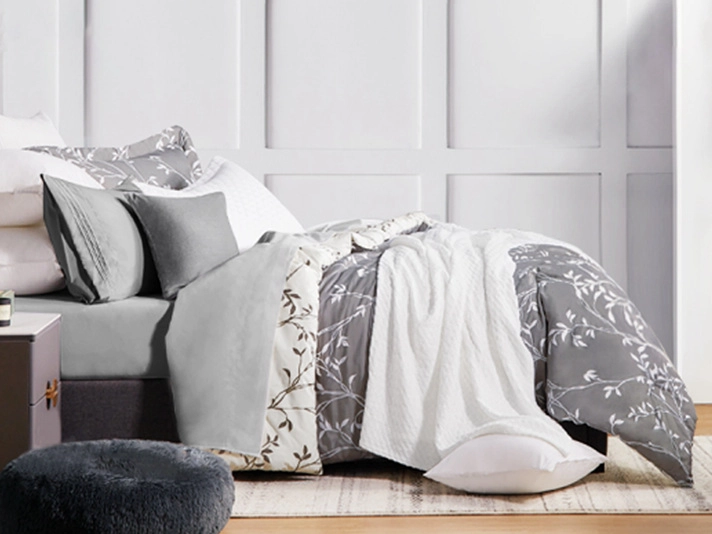
Different environments demand different textile characteristics. Hotel bedding requires a balance of luxury and washability; hospital linens prioritize hygiene and durability; spa sheets must be oil-resistant and soft. Longshow Textiles addresses these diverse needs by providing a one-stop shop for sheets, covers, duvets, pillows, and mattress protectors, ensuring that an entire facility's bedding ecosystem is cohesive and compatible.
FAQ
What is the difference between Percale and Sateen weaves for commercial use?
Percale is a plain weave that results in a matte finish and a crisp, cool feel, making it ideal for hotels in warmer climates or for those preferring a "fresh" bed feel. Sateen uses a different weaving structure that creates a smoother, silkier surface with a slight sheen. While Sateen feels more luxurious, Percale is often more breathable and durable for high-frequency laundering.
How do I verify the quality of microfiber sheets for a spa or clinic?
Verify the material's "commercial strength" by requesting a sample and testing it for pilling and oil resistance. Commercial-grade microfiber should be ultra-light yet heavy-duty, meaning it retains its softness after multiple wash cycles. Additionally, check for Oeko-Tex certification to ensure the synthetic fibers are processed without harmful chemicals, which is essential for skin-contact applications.
What are the typical lead times for large-scale bedding orders?
Lead times vary based on the level of customization and the order volume. However, a professionally managed factory with automated lines can typically guarantee higher on-time delivery rates. When evaluating a supplier, look for those who can provide a specific delivery percentage (e.g., over 98% on-time or early) to ensure your supply chain remains stable and without surprises.
Can I order custom sizes for non-standard massage tables?
Yes, professional manufacturers offering OEM/ODM services can customize sizes to fit specific equipment. When placing such an order, it is important to provide exact dimensions and specify the material—such as 100% polyester or blends—to ensure the fit is secure and the fabric performs according to the specific needs of the massage or therapy environment.
What certifications should I look for in a textile manufacturer?
The most critical certifications are Oeko-Tex Standard 100, which certifies that the textile is safe for human health, and SGS, which validates product quality and specifications. These certifications provide a layer of security for the buyer, ensuring that the products meet international safety and quality benchmarks before they enter the commercial market.
How does vertical integration benefit the buyer in B2B bedding procurement?
Vertical integration means the supplier owns the factories and controls the production process. For the buyer, this translates to more consistent product quality, more competitive pricing by removing middlemen, and faster communication regarding production updates. It significantly reduces the risk of quality variance between different batches of the same product.
References and further reading
- Oeko-Tex Standard 100: Global Standard for Textile Safety and Compliance.
- SGS Group: International Certification and Testing for Textile Performance.
- Hospitality Linen Management: Best Practices for Institutional Laundry and Lifecycle.
 English
 Afrikaans
 Albanian
 Amharic
 Arabic
 Armenian
 Azerbaijani
 Basque
 Belarusian
 Bengali
 Bosnian
 Bulgarian
 Catalan
 Cebuano
 China
 Corsican
 Croatian
 Czech
 Danish
 Dutch
 Esperanto
 Estonian
 Finnish
 French
 Frisian
 Galician
 Georgian
 German
 Greek
 Gujarati
 Haitian Creole
 Hausa
 Hawaiian
 Hebrew
 Hindi
 Miao
 Hungarian
 Icelandic
 Igbo
 Indonesian
 Irish
 Italian
 Japanese
 Javanese
 Kannada
 Kazakh
 Khmer
 Rwandese
 Korean
 Kurdish
 Kyrgyz
 Lao
 Latin
 Latvian
 Lithuanian
 Luxembourgish
 Macedonian
 Malgashi
 Malay
 Malayalam
 Maltese
 Maori
 Marathi
 Mongolian
 Myanmar
 Nepali
 Norwegian
 Norwegian
 Occitan
 Pashto
 Persian
 Polish
 Portuguese
 Punjabi
 Romanian
 Russian
 Samoan
 Scottish Gaelic
 Serbian
 Sesotho
 Shona
 Sindhi
 Sinhala
 Slovak
 Slovenian
 Somali
 Spanish
 Sundanese
 Swahili
 Swedish
 Tagalog
 Tajik
 Tamil
 Tatar
 Telugu
 Thai
 Turkish
 Turkmen
 Ukrainian
 Urdu
 Uighur
 Uzbek
 Vietnamese
 Welsh
 Bantu
 Yiddish
 Yoruba
 Zulu