



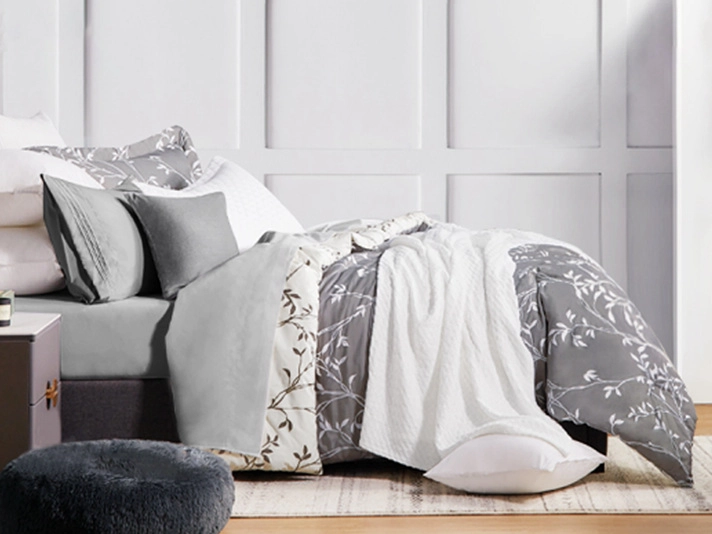
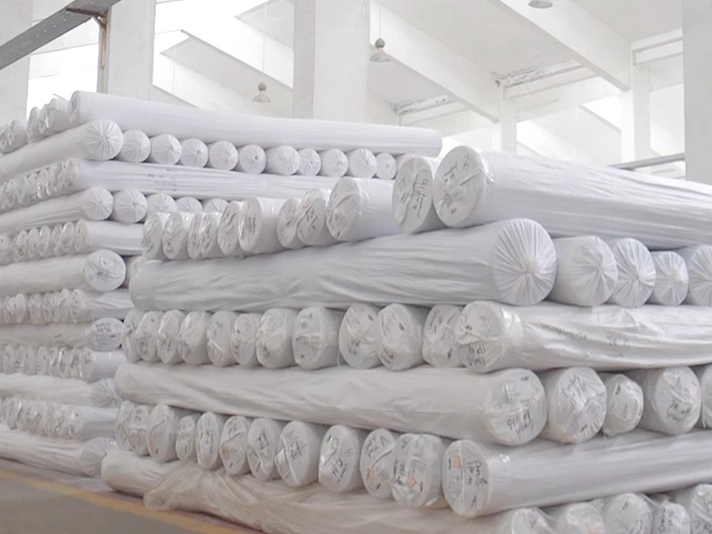

Selecting professional linen for healthcare facilities requires a balance between clinical rigor and patient comfort. Hospital bedding is not merely a utility but a critical component of the patient care environment, influencing everything from infection rates to recovery speeds. This guide examines the technical specifications and procurement strategies necessary for sourcing medical-grade textiles that withstand the rigors of continuous use.
For procurement officers and facility managers, identifying reliable hospital bedding suppliers involves evaluating manufacturing capabilities, material science, and adherence to international safety standards. The shift toward high-performance microfibers and specialized blends has transformed how hospitals manage their linen inventories to reduce replacement costs while maintaining strict hygiene.
Readers will discover the critical differences between various textile compositions, the impact of thread counts on durability, and how to assess a manufacturer's ability to scale production without compromising quality. We will also provide a framework for evaluating supplier certifications to ensure all products meet Oeko-Tex and SGS requirements for safety and non-toxicity.
Healthcare Linen Standards and Requirements
Medical textiles operate under far more stringent conditions than home or hotel linens. In a clinical setting, bedding must withstand high-temperature industrial laundering, chemical disinfectants, and constant mechanical stress. The primary objective is to create a barrier that protects the patient while facilitating easy sanitization. This requires a deep understanding of fabric weave and fiber properties. For instance, high-density microfiber is often preferred in certain clinical applications due to its moisture-wicking properties and resistance to pilling. Furthermore, the integration of vertically integrated manufacturing allows for better control over the fabric's consistency, ensuring that every sheet set maintains the same tensile strength and breathability across thousands of units. By focusing on automated production and strict quality control, facilities can minimize the risk of fabric failure, which can otherwise lead to patient discomfort or skin irritation.
Strategic Sourcing for Medical Bedding
Effective procurement begins with a detailed analysis of the specific clinical environment. Not all wards have the same requirements; an intensive care unit (ICU) demands different textile properties than a general recovery ward or a massage therapy center within a rehabilitation clinic. The following sections break down the seven key dimensions of sourcing high-performance healthcare linens.
Material Selection for Clinical Environments
The choice between cotton, polyester blends, or microfibers depends on the priority of the facility. While cotton offers maximum breathability, microfiber provides superior durability and faster drying times. For example, 120gsm microfiber fabric is an excellent choice for specialized sets where a balance of softness and strength is required.
| Material Type | Key Property | Clinical Application | Maintenance Level |
|---|---|---|---|
| Polyester Microfiber | High Durability | General Wards / Spas | Low |
| Pure Cotton | High Breathability | Long-term Patient Care | High |
| Bamboo Blends | Hypoallergenic | Dermatology / Pediatrics | Medium |
| Silk Blends | Low Friction | Specialized Recovery | High |
| Microfiber (1800TC) | Luxurious Feel | Premium Private Suites | Low |
| Polyester-Cotton | Balanced Performance | Standard Hospital Beds | Medium |
Durability and Industrial Laundering
Healthcare linens undergo frequent, aggressive washing cycles. To avoid premature degradation, fabrics must be engineered to resist shrinking and thinning. The use of high thread counts (such as 1800TC in premium microfibers) ensures a tighter weave that prevents the fabric from fraying during industrial agitation, extending the lifecycle of each set and reducing the total cost of ownership for the facility.
Patient Comfort and Skin Integrity
Prolonged bed rest increases the risk of pressure ulcers. Bedding must be smooth to minimize friction against the skin. Brushed finishes on microfiber fabrics provide a soft, silky touch that enhances patient relaxation and prevents skin shearing, which is particularly vital for elderly patients or those with limited mobility.
Infection Control and Hygiene Standards
Hygiene is the non-negotiable priority in any medical setting. Fabrics must be compatible with hospital-grade disinfectants without losing structural integrity. Oeko-Tex Standard 100 certification is a critical benchmark, ensuring that the textiles are free from harmful substances and are safe for direct contact with patients who may have compromised immune systems.
Customization for Specialized Wards
Standard sizes do not always fit specialized medical equipment. The ability to provide customized sizes and OEM/ODM services is essential. Whether it is tailored sheets for massage tables in physiotherapy or specific dimensions for pediatric cribs, precision in sizing prevents linens from bunching, which reduces both patient discomfort and the risk of contamination.
Supply Chain Reliability and Lead Times
A disruption in linen supply can halt hospital operations. Evaluating a supplier's production capacity is key; for instance, a facility capable of producing over 126,000 sheet sets per month with a 98% on-time delivery rate provides the necessary security to maintain lean inventory levels without risking shortages.
Certification and Compliance Verification
Procurement should only be finalized after verifying third-party certifications. SGS and Oeko-Tex certifications provide objective evidence of quality and safety. Buyers should request actual certificates rather than relying on claims, ensuring that the manufacturing process respects environmental and health standards.
FAQ
What is the ideal material for high-turnover hospital beds?
For high-turnover environments, polyester microfiber is often the most practical choice. It offers a combination of high durability, resistance to wrinkles, and faster drying times compared to 100% cotton, which reduces the laundry cycle time and lowers operational costs.
How does thread count affect the lifespan of medical linens?
A higher thread count generally indicates a denser weave, which increases the fabric's resistance to abrasion and tearing. In medical settings, a high-density weave prevents the fabric from thinning out quickly after repeated industrial washing, thereby extending the replacement cycle.
Why is Oeko-Tex certification important for healthcare textiles?
Oeko-Tex Standard 100 ensures that every component of the textile—from the thread to the dyes—has been tested for harmful substances. This is critical in hospitals to prevent allergic reactions or skin irritation in sensitive patients.
Can medical linens be customized for specific table sizes?
Yes, professional manufacturers offer OEM and ODM services to customize fabric weights, colors, and dimensions. This is particularly useful for massage table sheets or specialized surgical beds where standard dimensions may result in poor fit and instability.
What are the signs of a reliable textile supplier for hospitals?
Reliability is indicated by a vertically integrated supply chain, a proven track record of on-time delivery (e.g., 98% or higher), possession of international certifications like SGS, and the capacity to handle large-scale monthly volumes without quality degradation.
How should I evaluate the breathability of microfiber sheets?
Breathability can be evaluated by checking the GSM (grams per square meter) and the weave type. A 120gsm fabric is typically lightweight and breathable, making it suitable for patient comfort while maintaining enough density for clinical durability.
References and further reading
- International Standards for Healthcare Textiles (ISO/TC 38)
- Oeko-Tex Standard 100 Certification Guidelines for Medical Use
- Clinical Guidelines for Pressure Ulcer Prevention and Textile Selection
 English
 Afrikaans
 Albanian
 Amharic
 Arabic
 Armenian
 Azerbaijani
 Basque
 Belarusian
 Bengali
 Bosnian
 Bulgarian
 Catalan
 Cebuano
 China
 Corsican
 Croatian
 Czech
 Danish
 Dutch
 Esperanto
 Estonian
 Finnish
 French
 Frisian
 Galician
 Georgian
 German
 Greek
 Gujarati
 Haitian Creole
 Hausa
 Hawaiian
 Hebrew
 Hindi
 Miao
 Hungarian
 Icelandic
 Igbo
 Indonesian
 Irish
 Italian
 Japanese
 Javanese
 Kannada
 Kazakh
 Khmer
 Rwandese
 Korean
 Kurdish
 Kyrgyz
 Lao
 Latin
 Latvian
 Lithuanian
 Luxembourgish
 Macedonian
 Malgashi
 Malay
 Malayalam
 Maltese
 Maori
 Marathi
 Mongolian
 Myanmar
 Nepali
 Norwegian
 Norwegian
 Occitan
 Pashto
 Persian
 Polish
 Portuguese
 Punjabi
 Romanian
 Russian
 Samoan
 Scottish Gaelic
 Serbian
 Sesotho
 Shona
 Sindhi
 Sinhala
 Slovak
 Slovenian
 Somali
 Spanish
 Sundanese
 Swahili
 Swedish
 Tagalog
 Tajik
 Tamil
 Tatar
 Telugu
 Thai
 Turkish
 Turkmen
 Ukrainian
 Urdu
 Uighur
 Uzbek
 Vietnamese
 Welsh
 Bantu
 Yiddish
 Yoruba
 Zulu