Bed pillows, often taken for granted, are fundamental to restorative sleep and overall well-being. Globally, the demand for comfortable and supportive bed pillows continues to rise alongside increasing awareness of sleep health. From traditional down and feather fillings to innovative memory foam and hypoallergenic options, the bed pillow market reflects evolving consumer needs and technological advancements. Understanding the nuances of bed pillow construction, materials, and care is crucial for individuals seeking optimal sleep quality and long-term comfort.
The global bed pillow industry is a multi-billion dollar market, driven by factors like population growth, rising disposable incomes, and a growing focus on healthy lifestyles. According to market research, the Asia-Pacific region currently dominates the bed pillow market due to its large population and increasing urbanization. However, North America and Europe remain significant consumers, particularly of premium and specialized bed pillows. This market addresses a basic human need, providing support and comfort during sleep – a physiological necessity.
Challenges within the industry include the environmental impact of certain materials and the need for sustainable production practices. Furthermore, the increasing demand for hypoallergenic and antimicrobial bed pillows necessitates ongoing innovation in material science. The availability of quality bed pillows, like those found at bed pillows, directly impacts public health by promoting better sleep and reducing sleep-related disorders.

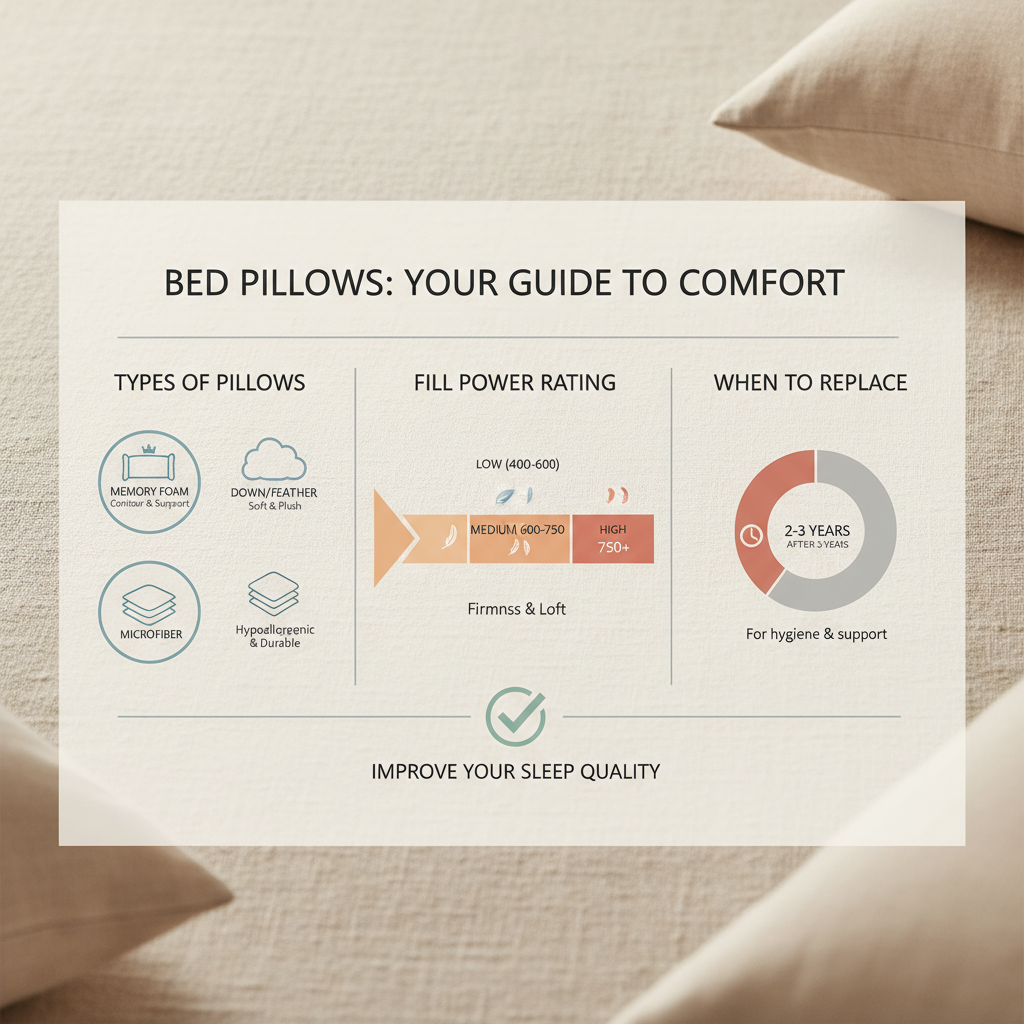
The materials used in bed pillow construction significantly impact comfort, support, and durability. Natural materials like cotton, silk, and down offer breathability and a luxurious feel, but can be more expensive and require specialized care. Synthetic materials, such as polyester and microfiber, are typically more affordable and easier to maintain, offering good support and hypoallergenic properties. Selecting the right material depends on individual preferences, budget, and allergy concerns.
The quality of the fabric encasing the fill is also crucial. A tightly woven fabric can prevent dust mites and allergens from penetrating the pillow, making it ideal for allergy sufferers. Furthermore, the weave and thread count influence the pillow’s breathability and overall comfort. Consumers increasingly seek bed pillows with certifications guaranteeing the absence of harmful chemicals and adherence to sustainable production standards.
For side sleepers, a higher loft pillow (typically 4-6 inches) is generally recommended. This height helps maintain proper spinal alignment by filling the gap between the shoulder and the head, preventing neck strain. Without sufficient loft, the head can tilt downwards, leading to discomfort and potential pain. It’s essential to find a loft that feels comfortable and supports a neutral spine position.
Most bed pillows should be replaced every 1-2 years. Over time, pillows accumulate dust mites, allergens, and lose their shape and support. While regular washing can help, it doesn't fully restore the pillow's original condition. Signs it’s time for a replacement include a lumpy or flat pillow, difficulty folding it in half, or experiencing increased neck pain or allergies.
Traditional memory foam can retain heat, making it uncomfortable for hot sleepers. However, many manufacturers now offer gel-infused memory foam or open-cell memory foam, which promote airflow and dissipate heat more effectively. Look for pillows labeled as “cooling” or “breathable” if you tend to sleep warm.
Washing down pillows requires special care. It's best to check the care label first. Generally, you'll want to use a front-loading washing machine with a gentle cycle and a down-specific detergent. Tumble dry on low heat with dryer balls to help fluff the down. Ensure the pillow is completely dry to prevent mildew. Some pillows may require professional cleaning.
A gusseted pillow has fabric side panels that create a firmer, more defined edge. This provides better support for the head and neck, especially for side sleepers. Standard pillows lack these side panels and tend to be flatter. Gusseted pillows often maintain their shape better and offer more consistent support throughout the night.
Use hypoallergenic pillows filled with materials like synthetic down or latex. Encase your pillow in a dust mite-proof cover. Wash your pillow frequently (following the care instructions) and your pillowcase weekly in hot water. Regularly vacuum your bedroom to reduce allergens. Maintaining a clean sleep environment can significantly reduce allergy symptoms.
In conclusion, bed pillows are far more than mere sleep accessories; they are integral to restorative sleep, overall health, and well-being. Understanding the diverse materials, construction techniques, and performance metrics empowers consumers to make informed choices aligned with their individual needs and preferences. The ongoing innovations in the bed pillow industry promise even greater comfort, support, and sustainability in the years to come, further enhancing the quality of our sleep.
As consumer awareness grows, prioritizing quality and ethical sourcing is becoming increasingly important. Investing in a well-chosen bed pillow is an investment in your long-term health and happiness. Explore the range of options available and discover the perfect bed pillow to unlock a truly restful and rejuvenating sleep experience. You can find a wide selection of quality bed pillows at bed pillows.

 Afrikaans
 Albanian
 Amharic
 Arabic
 Armenian
 Azerbaijani
 Basque
 Belarusian
 Bengali
 Bosnian
 Bulgarian
 Catalan
 Cebuano
 China
China
 Corsican
 Croatian
 Czech
Czech
 Danish
 Dutch
Dutch
 Esperanto
 Estonian
 Finnish
 French
 Frisian
 Galician
 Georgian
 German
 Greek
Greek
 Gujarati
 Haitian Creole
 Hausa
Hausa
 Hawaiian
 Hebrew
 Hindi
Hindi
 Miao
Miao
 Hungarian
 Icelandic
 Igbo
Igbo
 Indonesian
 Irish
Irish
 Italian
 Japanese
 Javanese
 Kannada
 Kazakh
 Khmer
Khmer
 Rwandese
 Korean
 Kurdish
 Kyrgyz
 Lao
Lao
 Latin
Latin
 Latvian
 Lithuanian
 Luxembourgish
 Macedonian
 Malgashi
 Malay
Malay
 Malayalam
 Maltese
 Maori
Maori
 Marathi
 Mongolian
 Myanmar
 Nepali
 Norwegian
 Norwegian
 Occitan
 Pashto
 Persian
 Polish
 Portuguese
 Punjabi
 Romanian
 Russian
 Samoan
 Scottish Gaelic
 Serbian
 Sesotho
 Shona
Shona
 Sindhi
 Sinhala
 Slovak
 Slovenian
 Somali
 Spanish
 Sundanese
 Swahili
 Swedish
 Tagalog
 Tajik
Tajik
 Tamil
Tamil
 Tatar
Tatar
 Telugu
 Thai
Thai
 Turkish
 Turkmen
 Ukrainian
 Urdu
Urdu
 Uighur
 Uzbek
Uzbek
 Vietnamese
 Welsh
Welsh
 Bantu
Bantu
 Yiddish
 Yoruba
 Zulu
Zulu
 English