Selecting a strategic supply partner for textile goods often comes down to the balance between scalable production capacity and the precision of custom craftsmanship. For businesses operating in the hospitality or retail sectors, the ability to maintain consistency across thousands of units while allowing for specific design tweaks is the primary differentiator between a generic product and a brand asset.
The shift toward specialized textiles—such as waffle-weave textures and sustainable blends—has forced procurement managers to look beyond simple catalogs. The focus has moved toward vertically integrated manufacturing where fabric selection, weaving, and finishing happen under one management system to reduce lead times and quality variance.
Whether you are upgrading hotel linens or launching a home bedding line, partnering with a professional wholesale bedding company ensures that technical specifications like GSM, thread count, and breathability are met consistently across every batch.


Vertical integration in the textile industry means the manufacturer controls everything from raw material sourcing and weaving to final stitching and packaging. This structure eliminates the "middleman" variance, where a fabric is bought from one mill and sewn in another factory, often leading to discrepancies in shrinkage and color fastness.
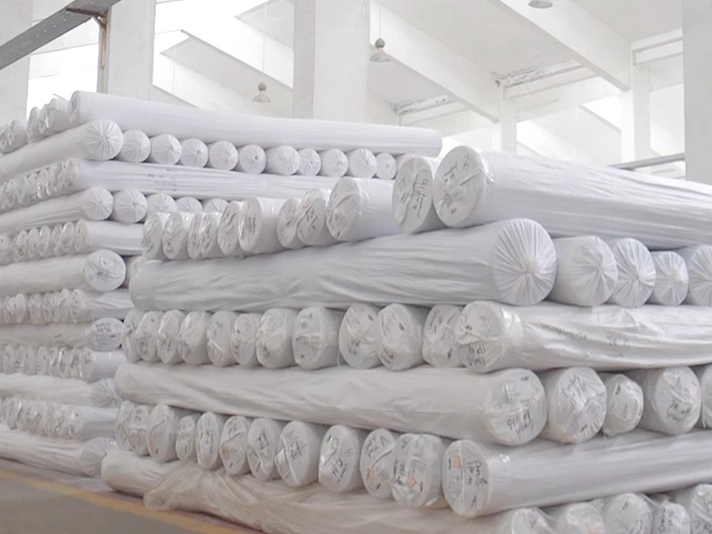
For a company like Longshow Textiles, owning multiple automated factories allows for a streamlined flow of production. This operational model is critical for maintaining a delivery rate where over 98% of orders are on time or early, a necessity for supply chains that cannot afford downtime in hotel or healthcare settings.
When evaluating wholesale textiles, the material composition is the first pillar of quality. While cotton remains a staple for breathability, the industry has seen a surge in bamboo and microfiber blends. Bamboo is favored for its natural hypoallergenic properties and moisture-wicking capabilities, making it a premium choice for home bedding sets and high-end spa linens.
Beyond the material, the construction method—such as the waffle-weave used in specialized duvet covers—introduces a functional dimension. The recessed squares of a waffle weave create air pockets that regulate temperature, providing warmth in winter and ventilation in summer. This makes the product adaptable to diverse climates, reducing the need for seasonal inventory changes for the wholesaler.
Durability is quantified by the fabric's resistance to industrial laundering. In hospitality contexts, linens must withstand high-temperature washes and chemical treatments without losing structural integrity. Utilizing Oeko-Tex Standard 100 certified processes ensures that the chemicals used in production are safe for the end-user and that the fabric remains stable over hundreds of wash cycles.
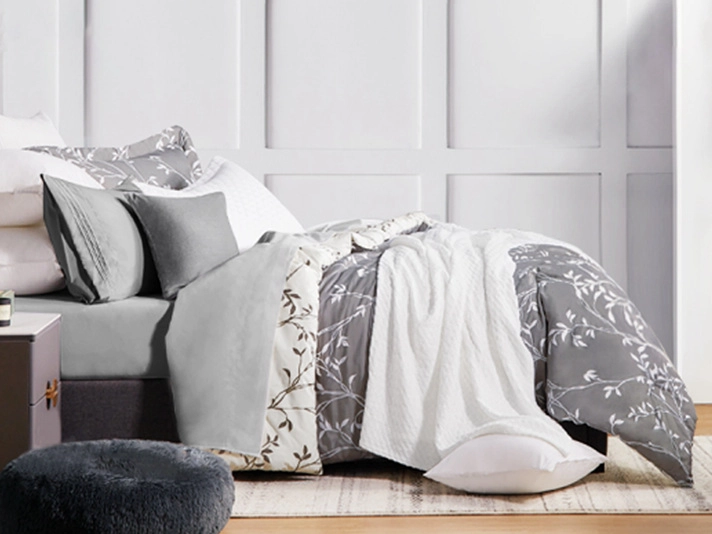
Tactile perception plays a decisive role in the consumer's purchasing journey. A "solid" pattern may look professional, but the addition of texture—like a fluffy waffle weave—transforms a basic commodity into a luxury experience. This visual and physical depth is often what allows retail brands to position their products in a higher price bracket.
The transition from flat-weave to textured fabrics in wholesale bedding represents a shift toward "experiential comfort," where the physical sensation of the fabric is as important as its technical specifications.
For the importer, this means that offering a variety of textures—such as mulberry silk for luxury, flax linen for rustic aesthetics, and waffle-weave polyester for modern durability—allows for a wider market reach. The ability to customize these textures through OEM/ODM services ensures that a brand's collection remains distinct from competitors using off-the-shelf designs.
A reliable wholesale bedding company is measured not just by the quality of a single sample, but by its capacity for consistency. The "Value Index" of a supplier is typically derived from three factors: production lead time, quality rejection rate, and the ability to scale monthly output without a drop in standards.
For instance, a facility capable of producing over 126,000 sheet sets per month demonstrates a level of industrial maturity that minimizes the risk of supply chain bottlenecks. This scalability allows the manufacturer to absorb sudden spikes in demand, such as those seen during peak hospitality seasons or holiday retail rushes.
The requirements for bedding vary drastically across different industries. In a luxury spa, the priority is tactile softness and visual purity, where high-GSM towels and bamboo linens create an atmosphere of serenity. In contrast, the healthcare sector demands "functional fabrics"—materials that are antimicrobial, fluid-resistant, and capable of enduring aggressive sterilization processes without fraying.
Hotel linens occupy a middle ground, requiring a balance of luxury and extreme durability. A typical industrial setting for a 4-star hotel involves high-turnover laundry cycles, making the choice of a durable polyester-cotton blend or a reinforced waffle-weave duvet cover a strategic decision to lower the total cost of ownership over the product's lifespan.
Sustainability has transitioned from a marketing buzzword to a core procurement requirement. Modern consumers are increasingly scrutinizing the environmental footprint of their textiles, leading to a surge in demand for organic cotton, flax linen, and recycled polyester. This shift requires manufacturers to adopt eco-conscious production processes that reduce water consumption and eliminate harmful dyes.
The integration of "circularity" into bedding production is the next frontier. This involves designing products that are not only durable but also easier to recycle at the end of their life cycle. By focusing on mono-material constructions or biodegradable blends, companies can align their product offerings with the growing global trend toward zero-waste living.
Furthermore, certifications like SGS and Oeko-Tex have become essential trust signals. For an international buyer, these certifications provide an objective guarantee that the products meeting their warehouse are free from hazardous substances, thereby reducing the risk of regulatory non-compliance in strictly monitored markets like the EU and North America.
Choosing the right partner requires a systematic evaluation of trade-offs. A lower unit price may be attractive, but if it comes with a high rejection rate or unpredictable lead times, the hidden costs can erode profit margins. The most successful importers prioritize a "Total Value" approach, weighing material quality against supply chain stability.
Customization capability is another critical pivot point. A factory that offers 100% custom fabrics and OEM/ODM services allows a brand to iterate its product line quickly based on market feedback. This agility is far more valuable than a fixed catalog of products that may become outdated as consumer tastes shift.
The following framework outlines the relative suitability of different bedding materials based on typical industry requirements, helping buyers align their selection with their specific target market.
| Material Type | Primary Industry | Durability Index | Key Selection Factor |
|---|---|---|---|
| Bamboo Blend | High-end Home / Spa | Medium-High | Hypoallergenic Properties |
| Poly-Cotton | Hospitality / Hotel | Very High | Laundering Resistance |
| Mulberry Silk | Luxury Retail | Medium | Skin-Feel & Aesthetics |
| Flax Linen | Eco-Home / Boutique | High | Breathability & Texture |
| Microfiber | Budget Hospitality | High | Cost-to-Performance Ratio |
| Waffle-Weave Poly | Modern Home / AirBnB | High | Thermal Regulation |
A factory-direct supplier owns the production assets, meaning they control the weaving, cutting, and sewing processes. This leads to more competitive pricing by removing intermediary margins and allows for deep customization (OEM/ODM). Trading companies typically source from various factories, which can lead to inconsistent quality and longer communication cycles when requesting technical changes to the fabric or design.
The waffle-weave structure creates a three-dimensional surface with recessed pockets. These pockets trap a layer of air that acts as a natural insulator, keeping the user warm in colder temperatures while allowing moisture and heat to escape more efficiently in warmer weather. This thermal regulation reduces the need for frequent bedding changes between seasons and prevents overheating during the night.
Oeko-Tex Standard 100 is the global benchmark, ensuring that the final textile product is free from harmful substances. SGS certification is also critical for verifying physical properties like tensile strength, color fastness, and shrinkage. These certifications provide the necessary documentation for customs clearance and protect the importer from liability regarding chemical safety and product quality standards.
Yes, provided it is a high-grade blend or a specialized functional fabric. Modern polyester is engineered for extreme durability and wrinkle resistance, which is essential for the "crisp" look required in hotel rooms. When blended with cotton or bamboo, it maintains the softness of natural fibers while gaining the industrial strength needed for frequent high-temperature laundering, often outperforming 100% cotton in longevity.
MOQs vary by product complexity, but for custom-colored or custom-textured duvet sets, a common threshold is around 500 sets per color. This allows the factory to optimize the dyeing and weaving runs. However, many vertically integrated manufacturers offer flexibility for initial sample orders to ensure the design and material meet the buyer's specifications before moving to full-scale production.
Breathability is a function of the weave density and the material's moisture-wicking properties. You can evaluate this by checking the GSM (Grams per Square Meter) and the thread count. Lower density weaves or those with natural fibers like bamboo and linen naturally breathe better. For synthetic blends, look for "functional fabric" designations that indicate the use of moisture-management yarns designed to move vapor away from the skin.
The success of a bedding line depends on the synergy between material science and supply chain execution. By moving toward vertically integrated partners who prioritize technical certifications and offer genuine customization, businesses can reduce operational risk and increase their market competitiveness.
As the industry evolves toward sustainable, textured, and functional textiles, the ability to source directly from the factory will remain the most effective way to maintain quality control while optimizing costs.

 Afrikaans
 Albanian
 Amharic
 Arabic
 Armenian
 Azerbaijani
 Basque
 Belarusian
 Bengali
 Bosnian
 Bulgarian
 Catalan
 Cebuano
 China
 Corsican
 Croatian
 Czech
 Danish
 Dutch
 Esperanto
 Estonian
 Finnish
 French
 Frisian
 Galician
 Georgian
 German
 Greek
 Gujarati
 Haitian Creole
 Hausa
 Hawaiian
 Hebrew
 Hindi
 Miao
 Hungarian
 Icelandic
 Igbo
 Indonesian
 Irish
 Italian
 Japanese
 Javanese
 Kannada
 Kazakh
 Khmer
 Rwandese
 Korean
 Kurdish
 Kyrgyz
 Lao
 Latin
 Latvian
 Lithuanian
 Luxembourgish
 Macedonian
 Malgashi
 Malay
 Malayalam
 Maltese
 Maori
 Marathi
 Mongolian
 Myanmar
 Nepali
 Norwegian
 Norwegian
 Occitan
 Pashto
 Persian
 Polish
 Portuguese
 Punjabi
 Romanian
 Russian
 Samoan
 Scottish Gaelic
 Serbian
 Sesotho
 Shona
 Sindhi
 Sinhala
 Slovak
 Slovenian
 Somali
 Spanish
 Sundanese
 Swahili
 Swedish
 Tagalog
 Tajik
 Tamil
 Tatar
 Telugu
 Thai
 Turkish
 Turkmen
 Ukrainian
 Urdu
 Uighur
 Uzbek
 Vietnamese
 Welsh
 Bantu
 Yiddish
 Yoruba
 Zulu
 English