When sourcing for commercial bedding, procurement managers often face a difficult trade-off between minimizing unit costs and maintaining a professional standard of guest comfort. The search for cheap twin sheets bulk often leads to a crossroads where the risk of rapid fabric degradation meets the necessity of high-volume inventory. For hospitality providers and institutional buyers, the challenge is not simply finding the lowest price, but identifying the threshold where affordability no longer compromises the operational lifespan of the linen.
This balance is critical because twin-sized bedding is frequently deployed in high-turnover environments, such as hostels, student housing, and budget hotels, where laundering frequency is aggressive. Selecting materials that are too thin leads to frequent replacements, effectively increasing the total cost of ownership despite a lower initial purchase price. Understanding the relationship between fabric weight, weave density, and bulk pricing allows buyers to optimize their budgets without sacrificing the basic requirements of skin-friendly comfort and durability.
To navigate these procurement complexities, it is essential to analyze the material science behind affordable linens and the logistical advantages of direct-from-manufacturer sourcing. This guide examines the technical specifications that define value in bulk bedding and how to evaluate suppliers based on production capacity and quality certifications. For those seeking a reliable supply chain, exploring cheap twin sheets bulk options requires a strategic focus on fabric blends and manufacturer transparency.


Bulk twin sheets are typically engineered using a variety of fiber blends to balance cost and performance. Microfiber, composed of ultra-fine polyester, is a dominant choice for budget-conscious buyers due to its innate resistance to wrinkles and rapid drying times. In contrast, poly-cotton blends leverage the breathability of natural cotton and the structural strength of polyester, making them a staple in the hospitality sector where longevity is paramount.
The structural integrity of these sheets is determined by the thread count and the weave type. While high thread counts are often marketed as a luxury, in a bulk commercial context, a moderate thread count with a tight percale or sateen weave often provides a better balance of breathability and wear-resistance. This ensures that the linens can withstand the chemical stress of industrial laundering without thinning or tearing prematurely.
When evaluating affordable linens, buyers must look beyond the price tag and examine the GSM (grams per square meter) and fabric stability. A higher GSM generally indicates a denser fabric that can withstand more wash cycles, which is essential for twin sheets used in high-occupancy settings. Furthermore, the quality of the hemming and stitching is a primary indicator of the manufacturer's attention to detail; poor stitching leads to fraying and premature failure of the sheet edges.
The true value of bulk bedding is found in its resistance to pilling and shrinkage. For procurement officers, prioritizing Oeko-Tex Standard 100 certification ensures that the materials are free from harmful substances, providing a necessary safety guarantee for guests with sensitive skin while maintaining a low cost-per-unit.
Additionally, colorfastness is a critical metric for those ordering customized colors. In a bulk environment, sheets are subjected to bleach and high-temperature detergents. Linens that utilize high-quality disperse dyes or solution-dyed fibers will maintain their professional appearance longer, reducing the frequency of inventory turnover and maintaining the visual standards of the facility.
Calculating the return on investment for bedding involves analyzing the cost per laundry cycle rather than the initial purchase price. A very cheap sheet that lasts 50 washes is significantly more expensive over a year than a moderately priced sheet that lasts 150 washes. By optimizing the material blend—such as choosing a 60/40 poly-cotton ratio—facilities can achieve a high level of durability while keeping procurement costs manageable.
Efficiency in bulk linens also extends to drying times. Synthetic blends dry faster than 100% cotton, which reduces energy costs in industrial laundries and allows for a faster turnaround of room readiness. This operational efficiency is a hidden financial gain that directly impacts the bottom line of hospitality and healthcare institutions.
Twin sheets are uniquely suited for environments with limited space or specific guest demographics. In the student housing and dormitory sector, the demand is for high-volume, low-maintenance bedding that can be easily laundered by residents or central services. Here, microfiber is often preferred for its wrinkle-free nature, ensuring that rooms look tidy even with minimal bedding care.
In healthcare and spa settings, the requirements shift toward hygiene and skin compatibility. Institutions often utilize functional fabrics or high-density cotton blends that can withstand medical-grade sterilization processes. For these applications, the focus is on moisture-wicking properties and hypoallergenic certifications, ensuring that the bulk supply meets strict health and safety regulations.
The bulk textile industry is currently shifting toward "circular economy" principles, where the focus is on the end-of-life phase of the product. We are seeing an increase in the use of recycled polyester (rPET) and organic bamboo blends in budget lines. These materials offer a way to reduce the environmental footprint of mass production without significantly increasing the cost for the end-user.
Technological advancements in waterless dyeing and energy-efficient weaving are also lowering the production cost of sustainable fabrics. This means that "cheap" bulk bedding may soon be synonymous with "eco-friendly" bedding, as the infrastructure for recycled fibers becomes more streamlined and cost-effective at scale.
Furthermore, the integration of smart fabrics—such as those with antimicrobial properties embedded in the fiber—is moving from luxury segments into bulk institutional supplies. This innovation is expected to reduce the reliance on harsh chemical washes, thereby extending the life of the fabric and reducing environmental pollution.
One of the most significant risks in bulk purchasing is the variance in quality between the sample provided and the final mass-produced shipment. To mitigate this, professional buyers insist on rigorous quality control (QC) reports and third-party inspections. Establishing a clear set of specifications, including weight, color tolerance, and seam strength, prevents disputes and ensures consistency across thousands of units.
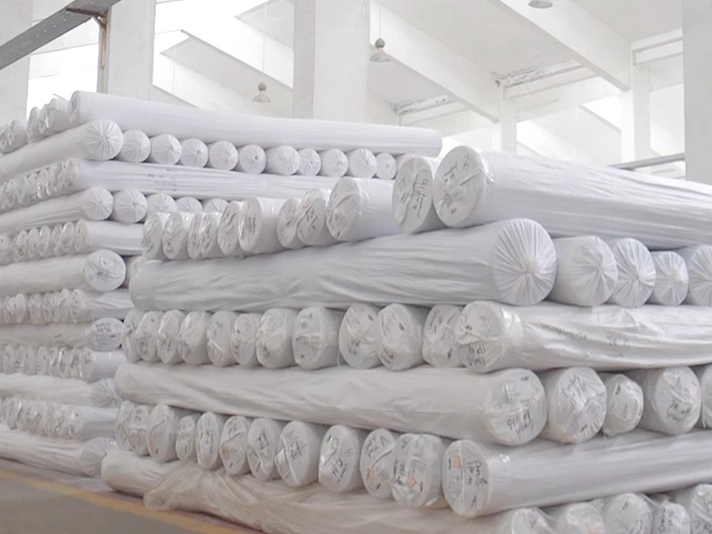
Supply chain volatility also poses a threat to inventory stability. Partnering with vertically integrated manufacturers, such as those who own their weaving and sewing facilities, reduces the risk of delays and allows for better customization (OEM/ODM). This integration ensures that the production timeline is controlled, guaranteeing on-time delivery for seasonal peaks in the hospitality industry.
Finally, managing the logistics of large-scale shipments requires a balance between shipping costs and lead times. Selecting a supplier with efficient export capabilities and a proven track record of international shipping helps in avoiding unexpected customs delays and reducing the total landed cost of the goods.
| Material | Durability | Breathability | Best Use Case |
|---|---|---|---|
| Microfiber | High | Moderate | Budget Hostels |
| Poly-Cotton | Very High | High | Mid-range Hotels |
| Bamboo Blend | Moderate | Very High | Eco-Spas |
| 100% Cotton | Moderate | Maximum | Luxury B&Bs |
| Tencel Blend | High | High | Healthcare |
| Polyester | Maximum | Low | Institutional |
Microfiber is generally the most cost-effective option for high-volume orders due to its low raw material cost and high durability. However, for facilities that prioritize guest breathability and a more natural feel, a poly-cotton blend offers a superior long-term value by balancing durability with comfort, reducing the overall replacement rate.
Consistency is achieved by defining strict technical specifications in the purchase agreement. This should include the GSM, thread count, and color codes (e.g., Pantone). Requesting a pre-production sample and requiring a third-party inspection report before shipment are the most effective ways to ensure the final product matches the approved sample.
Yes, most professional manufacturers offer OEM/ODM services that allow for custom sizing to fit non-standard mattresses. This is particularly common in healthcare or specialized hospitality settings. When ordering custom sizes, it is important to provide exact measurements including the mattress depth to ensure a snug fit and prevent slipping.
The Oeko-Tex Standard 100 is the gold standard for textile safety, ensuring that no harmful chemicals are present in the fabric. SGS certification is also valuable for verifying the physical properties and durability of the material. These certifications provide peace of mind regarding both the environmental impact and the safety of the end-user.
Bulk ordering reduces costs through economies of scale in raw material procurement and production efficiency. Manufacturers can run their looms and sewing lines continuously for one product, reducing setup times and labor costs per unit. Additionally, shipping costs are optimized when utilizing full container loads (FCL) rather than smaller parcels.
The lifespan depends heavily on the material and laundering process. Commercial-grade poly-cotton sheets typically last between 100 to 200 industrial wash cycles. Microfiber may last longer in terms of structural integrity but may show signs of pilling over time. Regular auditing of linen quality helps in planning the replacement cycle to avoid sudden inventory shortages.
Sourcing cheap twin sheets in bulk is a strategic exercise in balancing immediate budget constraints with long-term operational efficiency. The key to success lies in shifting the focus from the lowest possible unit price to the lowest cost-per-use. By prioritizing material science, verified certifications, and manufacturer transparency, procurement managers can secure linens that maintain professional standards while optimizing their financial resources.
Whether equipping a new hotel or refreshing a healthcare facility, the right bedding partner is one who provides consistent quality and reliable supply chain management. For those seeking professional guidance on material selection and bulk manufacturing, visiting www.longshowtextiles.com can provide a comprehensive starting point for establishing a sustainable and cost-effective textile partnership.

 Afrikaans
 Albanian
 Amharic
 Arabic
 Armenian
 Azerbaijani
 Basque
 Belarusian
 Bengali
 Bosnian
 Bulgarian
 Catalan
 Cebuano
 China
 Corsican
 Croatian
 Czech
 Danish
 Dutch
 Esperanto
 Estonian
 Finnish
 French
 Frisian
 Galician
 Georgian
 German
 Greek
 Gujarati
 Haitian Creole
 Hausa
 Hawaiian
 Hebrew
 Hindi
 Miao
 Hungarian
 Icelandic
 Igbo
 Indonesian
 Irish
 Italian
 Japanese
 Javanese
 Kannada
 Kazakh
 Khmer
 Rwandese
 Korean
 Kurdish
 Kyrgyz
 Lao
 Latin
 Latvian
 Lithuanian
 Luxembourgish
 Macedonian
 Malgashi
 Malay
 Malayalam
 Maltese
 Maori
 Marathi
 Mongolian
 Myanmar
 Nepali
 Norwegian
 Norwegian
 Occitan
 Pashto
 Persian
 Polish
 Portuguese
 Punjabi
 Romanian
 Russian
 Samoan
 Scottish Gaelic
 Serbian
 Sesotho
 Shona
 Sindhi
 Sinhala
 Slovak
 Slovenian
 Somali
 Spanish
 Sundanese
 Swahili
 Swedish
 Tagalog
 Tajik
 Tamil
 Tatar
 Telugu
 Thai
 Turkish
 Turkmen
 Ukrainian
 Urdu
 Uighur
 Uzbek
 Vietnamese
 Welsh
 Bantu
 Yiddish
 Yoruba
 Zulu
 English