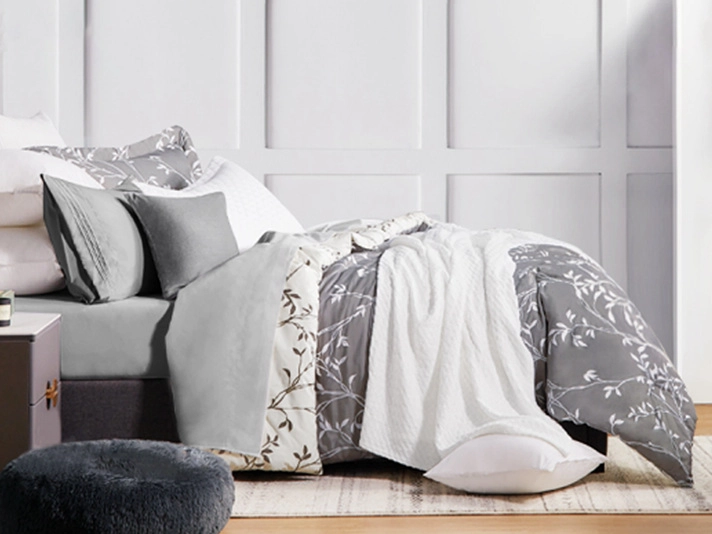
The global hospitality and home textile market is currently witnessing a significant shift toward vertical integration, where buyers increasingly seek a factory direct bedding sale to eliminate intermediary markups and ensure strict quality control. This transition is driven by a need for greater transparency in the supply chain, especially as commercial establishments demand higher durability and specific material certifications to meet evolving guest expectations.
For procurement managers in the hotel and healthcare sectors, the challenge lies in balancing cost-efficiency with the rigorous demands of commercial laundering. The ability to source directly from a manufacturer allows for precise customization of fabric weights and material blends, which are critical factors in determining the lifecycle and operational cost of linen assets.
This analysis explores the technical and economic advantages of direct-from-factory sourcing and provides a framework for evaluating textile specifications. To understand how these manufacturing advantages translate into tangible product quality, you can examine professional standards at factory direct bedding sale solutions.


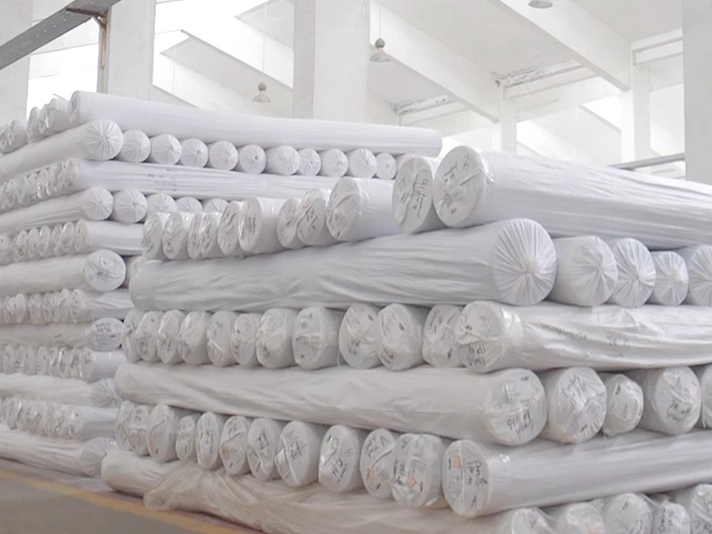
Vertical integration allows a manufacturer to control every stage of production, from raw fabric selection to final stitching and quality inspection. By owning automated factories, companies can streamline the workflow, reducing the lead time between an initial inquiry and final shipment.
This structure is essential for maintaining consistency across large volumes. When a facility operates with a professional management system and integrated quality control, the risk of supply chain surprises is minimized, ensuring that high-volume orders meet strict Oeko-Tex or SGS standards.
Understanding the technical parameters of bedding and bath linens is critical for determining the total cost of ownership. For instance, the material composition—whether 100% cotton, bamboo, or a polycotton blend—directly influences the moisture-wicking capabilities and the tactile experience for the end-user.
Weight is another pivotal metric. In products like hand towels, a choice between 120g and 150g per piece isn't just about thickness; it's a trade-off between absorbency and drying speed. Heavier towels provide a more luxurious feel and higher durability but require more energy and time for commercial drying processes.
Customization options, such as modified sizes (e.g., moving from a standard 35x75cm to a specialized dimension), allow commercial operators to optimize their laundry workflows and fitting requirements. This level of specification is typically only available through a direct factory relationship.
Commercial linens face far more aggressive conditions than home bedding, including high-temperature industrial washing and chemical bleaching. Engineering for this environment requires a focus on fiber tensile strength and weave density to prevent premature fraying and shrinkage.
By utilizing a factory direct bedding sale model, buyers can specify the exact GSM (grams per square meter) required for their specific usage intensity, ensuring that the product does not wear out prematurely while avoiding unnecessary over-specification that increases costs.
Sourcing bedding and towels through a direct manufacturer fundamentally alters the cost structure of a hospitality project. By removing the distributor layer, the procurement budget can be reallocated toward higher-grade materials, such as Mulberry Silk or Flax Linen, without increasing the total expenditure.
Furthermore, the ability to manage MOQ (Minimum Order Quantity) and payment terms like T/T or L/C directly with the factory enhances cash flow management for large-scale operations, providing a more stable and predictable supply chain.
In high-traffic environments like luxury spas and medical facilities, the demand for absorbent towels is non-negotiable. Pure cotton materials are preferred here because they provide unmatched comfort while ensuring that moisture is quickly removed from the skin, reducing the risk of slippage and enhancing the overall guest experience.
For hotel bathroom sets, the integration of various weights—using a heavier 150g hand towel alongside a standard bath mat—creates a tiered sensory experience. This strategic deployment of textile specifications allows a facility to signal luxury through fabric bulk and texture while maintaining an economical baseline for high-turnover items.
The industry is moving toward "functional fabrics" that integrate antimicrobial properties and moisture-management technology. These innovations are particularly critical for the healthcare sector, where bedding must withstand frequent sterilization without losing its soft hand-feel or structural integrity.
Sustainability is also reshaping manufacturing. The rise of bamboo bedding and organic cotton blends reflects a market demand for eco-friendly options that do not sacrifice the performance metrics required for commercial use. The challenge for manufacturers is to maintain the "factory direct" price point while incorporating these more expensive, sustainable raw materials.
We anticipate an increase in the use of automated quality inspection systems, utilizing AI to detect weaving flaws in real-time. This will further increase the reliability of large-scale shipments, ensuring that 98% or more of orders are delivered with zero defects.
When evaluating a factory direct bedding sale proposal, procurement officers should move beyond price-per-unit and look at the "lifecycle value." This includes analyzing the relationship between material weight, wash-cycle durability, and the required replacement frequency.
A comprehensive evaluation must also consider the manufacturer's certification status. Oeko-Tex Standard 100 and SGS certifications provide an objective baseline for chemical safety and material purity, which are essential for compliance in international markets.
The following matrix provides a framework for comparing different textile configurations based on their intended application and performance requirements.
| Configuration Type | Material Basis | Performance Factor | Recommended Use Case |
|---|---|---|---|
| Standard Economy | Polycotton Blend | Fast Drying / Low Cost | Budget Hospitality / Gyms |
| Premium Comfort | 100% Pure Cotton | High Absorbency / Softness | Mid-to-High Range Hotels |
| Luxury Tier | Mulberry Silk / Linen | Thermal Regulation / Luster | Boutique Luxury Resorts |
| Eco-Functional | Bamboo Fiber | Hypoallergenic / Sustainable | Wellness Spas / Healthcare |
| High-Duty Commercial | Heavy-Weight Cotton | Maximum Durability / Bulk | Industrial Laundries / Spas |
| Specialized Medical | Functional Fabric | Antimicrobial / Sterilizable | Hospitals / Clinics |
The primary difference lies in the fabric density and absorbent capacity. A 150g towel has a higher GSM, meaning it can hold more water and feels more substantial to the touch, making it ideal for luxury settings. However, the 120g option is more economical and dries significantly faster in commercial dryers, which can reduce overall energy costs for high-turnover operations.
By eliminating intermediaries, the buyer communicates specifications directly to the production team. This allows for tighter control over the manufacturing process, from the raw cotton grading to the final stitching. Vertical integration ensures that every batch is subject to the same internal quality audits and certifications, such as Oeko-Tex Standard 100, reducing the variance found in distributed inventories.
Yes, high-quality 100% cotton linens are designed to withstand commercial laundering, including the use of industrial bleach for whitening. However, the longevity depends on the fiber quality. Textiles engineered for commercial use utilize longer cotton staples and specific weave patterns that resist the degrading effects of chemical oxidizers better than standard home-grade linens.
For spa environments, prioritize bamboo bedding that emphasizes hypoallergenic properties and moisture-wicking performance. You should evaluate the blend ratio (bamboo vs. cotton) to ensure a balance between the silky feel of bamboo and the structural stability of cotton. Additionally, verify that the fabric is treated for commercial washability to ensure it doesn't shrink during high-temperature cycles.
Minimum Order Quantities (MOQs) are generally based on the raw material procurement and the setup time for automated machinery. For standard items like white cotton towels, MOQs may be as low as 500 pieces. For highly customized orders—such as specific colors, bespoke embroidery, or unique sizes—the MOQ may increase to ensure the production run is economically viable for the factory.
Vertical integration significantly reduces lead times by removing the logistics delays associated with multiple vendors. Since the company owns the factories and manages the fabric sourcing, they can move from order confirmation to production and shipping in a streamlined process. This typically results in a higher on-time delivery rate, often exceeding 98%, which is critical for maintaining supply chain stability.
The transition toward a factory direct bedding sale model represents more than just a cost-saving measure; it is a strategic move toward engineering-led procurement. By focusing on precise material specifications—such as the critical distinction between 120g and 150g weights—and ensuring vertical integration, hospitality and healthcare operators can significantly increase the lifecycle of their linen assets.
Ultimately, the ability to customize products at the source ensures that the textiles are perfectly aligned with the operational rigors of commercial laundering. For those seeking to optimize their supply chain with certified, high-performance linens, exploring integrated manufacturing solutions is the most reliable path to long-term quality and cost-efficiency.

 Afrikaans
 Albanian
 Amharic
 Arabic
 Armenian
 Azerbaijani
 Basque
 Belarusian
 Bengali
 Bosnian
 Bulgarian
 Catalan
 Cebuano
 China
 Corsican
 Croatian
 Czech
 Danish
 Dutch
 Esperanto
 Estonian
 Finnish
 French
 Frisian
 Galician
 Georgian
 German
 Greek
 Gujarati
 Haitian Creole
 Hausa
 Hawaiian
 Hebrew
 Hindi
 Miao
 Hungarian
 Icelandic
 Igbo
 Indonesian
 Irish
 Italian
 Japanese
 Javanese
 Kannada
 Kazakh
 Khmer
 Rwandese
 Korean
 Kurdish
 Kyrgyz
 Lao
 Latin
 Latvian
 Lithuanian
 Luxembourgish
 Macedonian
 Malgashi
 Malay
 Malayalam
 Maltese
 Maori
 Marathi
 Mongolian
 Myanmar
 Nepali
 Norwegian
 Norwegian
 Occitan
 Pashto
 Persian
 Polish
 Portuguese
 Punjabi
 Romanian
 Russian
 Samoan
 Scottish Gaelic
 Serbian
 Sesotho
 Shona
 Sindhi
 Sinhala
 Slovak
 Slovenian
 Somali
 Spanish
 Sundanese
 Swahili
 Swedish
 Tagalog
 Tajik
 Tamil
 Tatar
 Telugu
 Thai
 Turkish
 Turkmen
 Ukrainian
 Urdu
 Uighur
 Uzbek
 Vietnamese
 Welsh
 Bantu
 Yiddish
 Yoruba
 Zulu
 English