




Selecting the right bedding manufacturer is often the deciding factor between a hospitality venture that thrives on guest loyalty and one that struggles with constant linen replacement costs. The complexity of balancing thread count, material durability, and tactile comfort requires more than just a supplier; it requires a strategic manufacturing partner.
In the professional textile sector, the shift toward vertically integrated production has redefined how procurement managers evaluate quality and lead times. From the precision of 300TC poly-cotton blends to the sustainable appeal of bamboo and flax linen, the technical specifications of the fabric dictate the operational efficiency of the laundry cycle.
This guide examines the critical benchmarks for evaluating textile partners, analyzing the trade-offs between various material blends and the industrial standards that ensure long-term reliability in high-turnover environments like hotels, spas, and healthcare facilities.

Evaluating the Infrastructure of Professional Textile Production

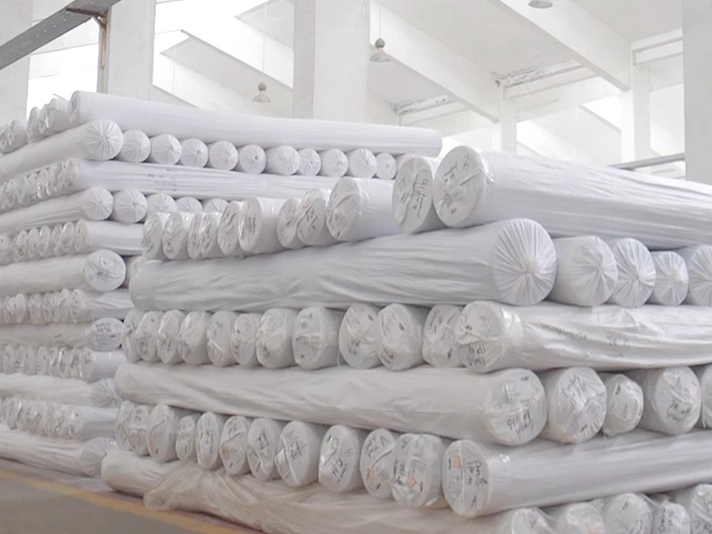
A capable bedding manufacturer is defined not by their catalog, but by their control over the vertical supply chain. When a company owns its factories—such as the automated facilities spanning over 180,000 sqft managed by Longshow—the risk of volatility in raw material sourcing and quality drift is significantly reduced.
For procurement officers, the ability of a manufacturer to handle 100+ daily inquiries while maintaining strict production and quality control is a primary indicator of scalability. Vertical integration ensures that the transition from raw fabric weaving to the final stitched sheet set is seamless, reducing the lead times that often plague multi-vendor sourcing models.
Moreover, certification by bodies like Oeko-Tex Standard 100 and SGS provides a verifiable baseline for safety and chemical compliance. In an era of heightened environmental scrutiny, these certifications move from being "optional extras" to mandatory requirements for entering the global hospitality and healthcare markets.
Material Science: Balancing Comfort with Industrial Durability
The tension in textile engineering lies between the perceived luxury of the fabric and its ability to withstand industrial laundering. Pure cotton offers unmatched breathability but is prone to heavy wrinkling and slower drying times, which can bottleneck hotel operations.
The introduction of poly-cotton blends, specifically those utilizing a T300 process with 60% cotton and 40% polyester, solves this dilemma. This specific ratio maintains the soft touch of natural fibers while leveraging the tensile strength and wrinkle resistance of polyester. The addition of satin stripe designs (typically 1cm to 3cm) isn't merely aesthetic; it adds a dimensional texture that masks minor wear and tear.
Beyond blends, the industry is seeing a surge in specialized materials. Bamboo bedding provides natural antimicrobial properties, while Mulberry silk is reserved for ultra-premium suites. Each material requires a different weaving tension and finishing process to ensure the final product doesn't shrink or pill prematurely.
Operational Integration Across Diverse Hospitality Environments
Bedding requirements shift drastically depending on the end-use environment. A luxury hotel requires high-thread-count cotton or silk for aesthetic prestige, whereas a healthcare facility prioritizes functional fabrics that are fluid-resistant and capable of enduring high-temperature sterilization.
In spa and wellness settings, the focus shifts toward absorbency and softness, making bamboo and heavy-weight cotton towels the primary assets. The operational workflow in these environments demands products that can be processed in bulk without losing their "plush" feel, necessitating a manufacturer that understands the specific yarn counts required for different absorption rates.
Ultimately, the goal is to create a cohesive linen program. This means matching the duvet inserts and pillows to the top sheets in terms of breathability and weight, ensuring that the guest experience is consistent regardless of the room category. A one-stop-shop approach allows for better synchronization of these elements.
Performance Metrics for High-Turnover Bedding Systems
Measuring the efficiency of a bedding system involves analyzing the relationship between initial investment and the replacement cycle. A lower-cost fabric that requires replacement every six months is far more expensive than a premium T300 blend that lasts eighteen months.
Key performance indicators include wrinkle recovery rates, color fastness after repeated bleaching, and the maintenance of the "hand-feel" (softness). When compared to standard industry benchmarks, vertically integrated production typically shows higher consistency in these metrics due to tighter control over the weaving process.
bedding manufacturer Performance Metrics
As illustrated, the integration of professional quality control and automated production leads to a measurable increase in on-time delivery and product consistency. Reducing the "surprise" factor in the supply chain allows hotel managers to optimize their inventory levels without risking shortages during peak seasons.
Procurement Strategies for Sustainable Supply Chain Stability
Procurement in the textile industry often fails due to a lack of specification clarity. Ordering "300TC sheets" is insufficient; professionals must specify the yarn count (e.g., 4040s), the exact material blend (60% cotton / 40% polyester), and the desired width (110" or 120") to avoid fitment issues with oversized mattresses.
Establishing an OEM/ODM relationship allows for custom fabric development, which is essential for brands looking to differentiate their guest experience. By collaborating with a manufacturer's fabric experts, buyers can develop blends that specifically target the climate of their location—using more linen or bamboo in humid regions and heavier cotton blends in colder climates.
Risk mitigation also involves diversifying the product range. A robust supply chain should encompass not just sheets, but mattress protectors, duvet inserts, and bath linen, ensuring that the tactile experience is unified across the entire guest journey from the bedroom to the bathroom.
Emerging Trends in Functional and Eco-Friendly Bedding
The textile industry is currently pivoting toward "functional fabrics" that offer more than just comfort. We are seeing an increase in demand for antimicrobial finishes in healthcare settings and moisture-wicking properties in home bedding, driven by a more health-conscious consumer base.
Sustainability is no longer a niche market. The adoption of flax linen and bamboo bedding is expected to grow as hotels strive to meet ESG (Environmental, Social, and Governance) goals. These materials not only reduce the chemical footprint of production but also offer a narrative of luxury and wellness that guests are increasingly seeking.
Furthermore, the integration of automation in factories—reducing waste and optimizing energy use—is becoming a competitive advantage. Manufacturers who can prove a reduction in water usage during the dyeing process are likely to secure long-term partnerships with global hotel chains.
Comparative Framework for Bedding Material Selection
Choosing the right fabric requires a cold analysis of the expected usage intensity versus the desired guest perception. While Mulberry silk is the pinnacle of luxury, its maintenance requirements make it impractical for high-traffic standard rooms.
The following table provides a decision-making matrix for procurement managers to align material choice with specific operational goals and environment types.
| Material Blend | Primary Use Case | Durability Rating | Operational Edge |
|---|---|---|---|
| Poly-Cotton T300 | Mid-to-High End Hotels | Very High | Wrinkle Resistance |
| Pure Cotton | Luxury Boutique Suites | High | Maximum Breathability |
| Bamboo Fiber | Eco-Resorts / Spas | Medium | Antimicrobial Properties |
| Flax Linen | Rustic / High-End Home | High | Thermal Regulation |
| Mulberry Silk | VIP / Presidential Suites | Low | Hypoallergenic Luxury |
| Microfiber | Budget Lodging / Hostels | Medium | Fast Drying Cycle |
For organizations evaluating these options, the key is to avoid a "one size fits all" approach. A tiered bedding strategy—using poly-cotton for standard rooms and silk or high-thread-count cotton for suites—optimizes both the budget and the guest experience.
Frequently Asked Questions
Conclusion
The procurement of professional bedding is a technical exercise in balancing tactile luxury with operational pragmatism. By focusing on vertically integrated manufacturers who can guarantee material consistency and adherence to international standards, businesses can significantly reduce their long-term replacement costs and enhance guest satisfaction.
Whether transitioning to sustainable bamboo fabrics or optimizing the efficiency of a poly-cotton T300 system, the key lies in precise specification and a reliable supply chain. Procurement professionals evaluating these textile solutions can review detailed product specifications and company capabilities through www.longshowtextiles.com.



 English
 Afrikaans
 Albanian
 Amharic
 Arabic
 Armenian
 Azerbaijani
 Basque
 Belarusian
 Bengali
 Bosnian
 Bulgarian
 Catalan
 Cebuano
 China
 Corsican
 Croatian
 Czech
 Danish
 Dutch
 Esperanto
 Estonian
 Finnish
 French
 Frisian
 Galician
 Georgian
 German
 Greek
 Gujarati
 Haitian Creole
 Hausa
 Hawaiian
 Hebrew
 Hindi
 Miao
 Hungarian
 Icelandic
 Igbo
 Indonesian
 Irish
 Italian
 Japanese
 Javanese
 Kannada
 Kazakh
 Khmer
 Rwandese
 Korean
 Kurdish
 Kyrgyz
 Lao
 Latin
 Latvian
 Lithuanian
 Luxembourgish
 Macedonian
 Malgashi
 Malay
 Malayalam
 Maltese
 Maori
 Marathi
 Mongolian
 Myanmar
 Nepali
 Norwegian
 Norwegian
 Occitan
 Pashto
 Persian
 Polish
 Portuguese
 Punjabi
 Romanian
 Russian
 Samoan
 Scottish Gaelic
 Serbian
 Sesotho
 Shona
 Sindhi
 Sinhala
 Slovak
 Slovenian
 Somali
 Spanish
 Sundanese
 Swahili
 Swedish
 Tagalog
 Tajik
 Tamil
 Tatar
 Telugu
 Thai
 Turkish
 Turkmen
 Ukrainian
 Urdu
 Uighur
 Uzbek
 Vietnamese
 Welsh
 Bantu
 Yiddish
 Yoruba
 Zulu