



Jan.04, 2026 03:35
Back to list
Durable and Comfortable 50 Cotton 50 Polyester Sheets | Industry Insights
50 Cotton and 50 Polyester Sheets: A Practical Blend in Industrial Textiles
Having spent years knee-deep in the industrial textiles sector, I've seen firsthand the way fabric compositions influence everything from durability to comfort. So when folks ask me about 50 cotton and 50 polyester sheets, I like to emphasize the unique balance these blends strike—both from a performance and value perspective.
Combining natural fibers like cotton with synthetic polyester isn't just a marketing gimmick; it's a carefully engineered trade-off. Cotton, beloved for its breathability and softness, can sometimes fall short on wrinkle resistance or longevity in heavy-use environments. Polyester brings strength, wrinkle resilience, and moisture-wicking properties to the table. Mix them, and you've got a sheet that feels comfortable but stands up better to the rigors of industrial or hospitality laundry cycles.
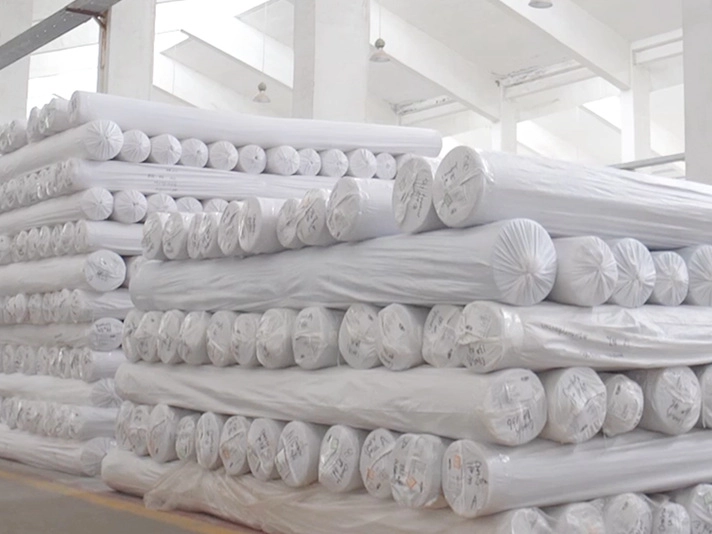
Oddly enough, the production nuances vary by mills, but most 50/50 blends on the market share a similar construction approach. Longshow Textile, for example, tailors their blended fabric to optimize tensile strength while maintaining a reasonably soft touch—something I appreciate when recommending suppliers for contract bedding or medical linens.
| Specification | Details |
|---|---|
| Fiber Composition | 50% Cotton / 50% Polyester |
| Weave Type | Percale or Sateen |
| Thread Count Range | 180 - 220 |
| Weight | 120-140 g/m² |
| Shrinkage | Typically under 3% (after washing) |
| Colorfastness | High (depends on dye and treatment) |
In real terms, what does this mean for day-to-day use? If you're outfitting a busy hotel, hospital, or dormitory, these sheets combine the best of both worlds. They dry faster than pure cotton, resist wrinkles (which frankly saves a ton of ironing labor), and usually maintain their color better through repeated washes. I've also noticed that blending fabrics tends to reduce pilling compared to 100% polyester alternatives, which patients or guests seem to appreciate on a subconscious level—softness counts even if they don’t notice it immediately.
Customer feedback from the industrial laundries I've worked with often highlights longevity and cost-efficiency. One facility manager recently told me she was skeptical at first, but after switching her stock to 50/50 blends from Longshow Textile, her linen replacement cycle extended by nearly a year. That’s not insignificant when you run fleets of sheets and pillowcases across multiple sites.
| Feature | Longshow Textile | Competitor A | Competitor B |
|---|---|---|---|
| Fabric Quality | Consistent high-grade 50/50 blend | Variable quality; some lots thin | Good but prone to color fading |
| Custom Printing Options | Available (MOQ applies) | Limited | Not offered |
| Lead Time | 3-5 weeks | 4-6 weeks | 4 weeks |
| Price Range | Moderate; good value | Lower but inconsistent | Higher end |
| Warranty / Quality Guarantee | Yes, with batch traceability | No formal guarantee | Limited warranty |
Customization is another angle worth mentioning. Longshow Textile’s willingness to support custom orders, whether for specific colors, patterns, or treatments like anti-microbial finishes, has proven valuable. I once recommended them to a health clinic that needed sheets meeting particular hygiene certification criteria — it made the entire procurement process smoother than usual.
For those in the manufacturing or supply chain side of things, understanding these textile blends gets down to specs like shrinkage rates, thread count, and fiber integrity, which translate directly into product lifespan and user satisfaction. The technical sheets I’ve seen passed through Longshow show consistent lab results, aligning with industry standards — not something you can say confidently about every vendor out there.
To sum it up, whether you're managing contracts or just genuinely fascinated by textiles (like I am), 50 cotton and 50 polyester blends offer a sensible, balanced option. They're kind of the Swiss Army knife of bedding fabrics — adaptable, reliable, and a good value. I suppose that’s why so many industrial users stick with them despite all the other fancier or specialized textiles cropping up...
As always, I recommend checking with your supplier on fabric certifications and testing reports. Textile performance can vary widely based on finishing processes and raw material sourcing — it’s worth the double-check.
Thanks for reading, and if you want a trusted source for industrial textiles, check out Longshow Textile’s offerings.
References:
1. Textile Industry Research Reports, 2022
2. Longshow Textile Product Literature, 2023
3. Feedback from hospitality and medical laundry managers, 2023
Latest news
-
How to Choose and Maintain an Extra Fluffy Duvet Insert for SleepNewsApr.16, 2026
-
How to Choose a Non Toxic Duvet Insert for Better Sleep HealthNewsApr.09, 2026
-
Choosing the Perfect Fluffy Down Alternative Comforter for a Restful Nights SleepNewsApr.07, 2026
-
Choosing the Best Hypoallergenic Duvet Insert for a Comfortable and Healthy SleepNewsApr.04, 2026
-
Choosing the Perfect Light Duvet Insert for a Restful Nights SleepNewsMar.31, 2026
-
Discover the Benefits of an Organic Down Alternative Comforter for Better SleepNewsMar.28, 2026
-
Discover the Perfect Thin Duvet Insert for a Restful Nights SleepNewsMar.26, 2026
 Afrikaans
 Albanian
 Amharic
 Arabic
 Armenian
 Azerbaijani
 Basque
 Belarusian
 Bengali
 Bosnian
 Bulgarian
 Catalan
 Cebuano
 China
China
 Corsican
 Croatian
 Czech
Czech
 Danish
 Dutch
Dutch
 Esperanto
 Estonian
 Finnish
 French
 Frisian
 Galician
 Georgian
 German
 Greek
Greek
 Gujarati
 Haitian Creole
 Hausa
Hausa
 Hawaiian
 Hebrew
 Hindi
Hindi
 Miao
Miao
 Hungarian
 Icelandic
 Igbo
Igbo
 Indonesian
 Irish
Irish
 Italian
 Japanese
 Javanese
 Kannada
 Kazakh
 Khmer
Khmer
 Rwandese
 Korean
 Kurdish
 Kyrgyz
 Lao
Lao
 Latin
Latin
 Latvian
 Lithuanian
 Luxembourgish
 Macedonian
 Malgashi
 Malay
Malay
 Malayalam
 Maltese
 Maori
Maori
 Marathi
 Mongolian
 Myanmar
 Nepali
 Norwegian
 Norwegian
 Occitan
 Pashto
 Persian
 Polish
 Portuguese
 Punjabi
 Romanian
 Russian
 Samoan
 Scottish Gaelic
 Serbian
 Sesotho
 Shona
Shona
 Sindhi
 Sinhala
 Slovak
 Slovenian
 Somali
 Spanish
 Sundanese
 Swahili
 Swedish
 Tagalog
 Tajik
Tajik
 Tamil
Tamil
 Tatar
Tatar
 Telugu
 Thai
Thai
 Turkish
 Turkmen
 Ukrainian
 Urdu
Urdu
 Uighur
 Uzbek
Uzbek
 Vietnamese
 Welsh
Welsh
 Bantu
Bantu
 Yiddish
 Yoruba
 Zulu
Zulu
 English